Fan Filter vs Box Fan Furnace Filter for Cat Hair
The viral box fan plus furnace filter is real, cheap, and good. It just isn't built for visible cat hair. Here's the line between what a MERV filter is for and what a coarse mesh is for.

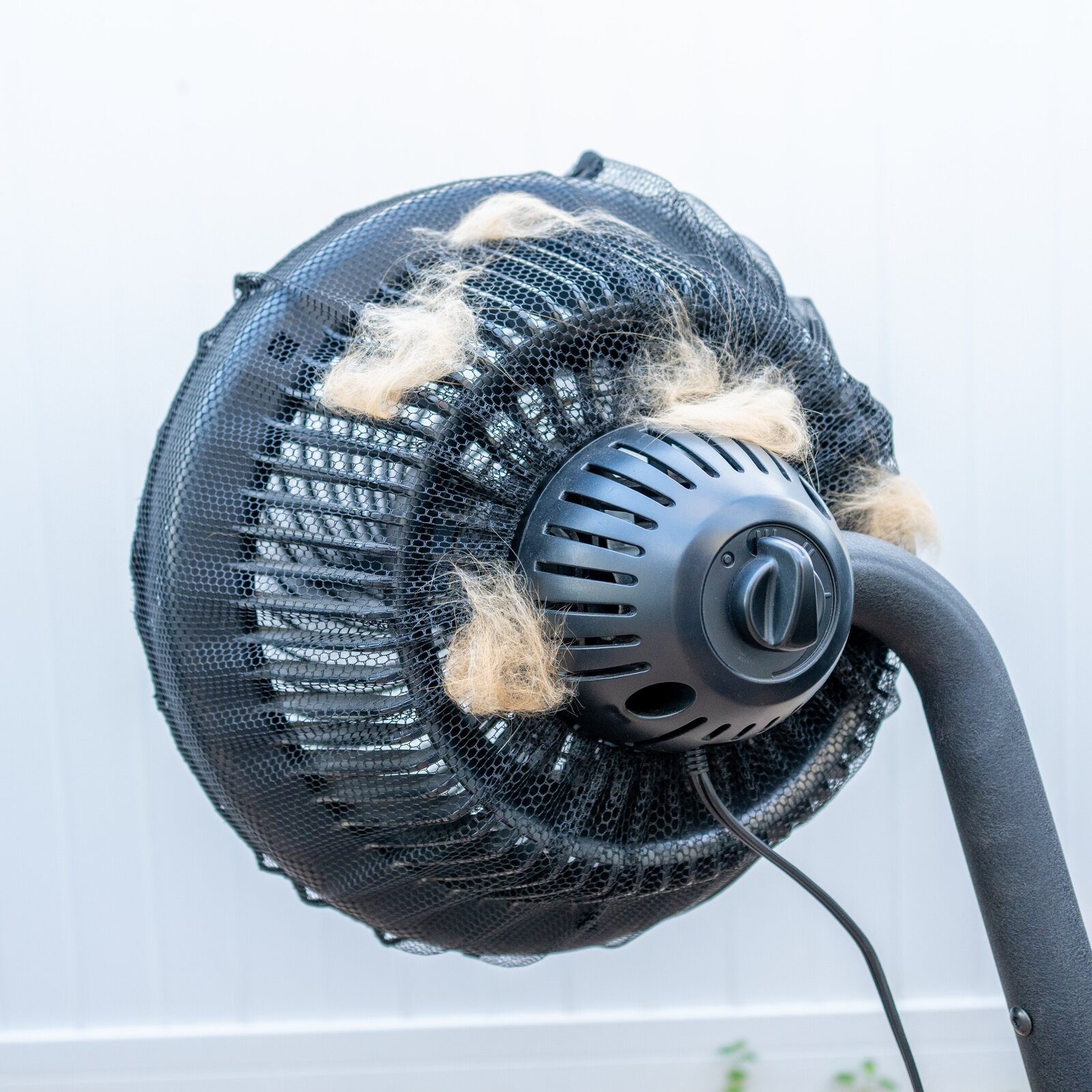
If you spend any time in cat-owner forums you've seen the build: a 20 inch box fan with a furnace filter taped to the back, sometimes a four-sided cube of them. It went viral for a reason. It's cheap, it works, and during wildfire season it genuinely clears the air. So people ask the obvious question: can I just use that to catch my cat hair too?
Short version, no, not the visible hair. The box fan furnace filter and the FurStopper Fan Filter look like they do the same thing because both involve a fan and a filter. They don't. One scrubs microscopic particles out of the air you breathe. The other catches the centimeters-long strands you can see on the couch. The difference comes down to two things: pore size and fan shape.
The whole comparison in one table
The two tools at a glance
Here's the split before any of the reasoning. Read the last column first, that's where the answer lives.
| Tool | Filters | Pore size | Best for | Clogs with hair? |
|---|---|---|---|---|
| FurStopper Fan Filter | Coarse polyester mesh on a round fan | ~1 cm holes | Visible cat hair on round fans, clean blades | No, hair sits on top and washes off |
| Box fan + furnace filter (DIY) | Pleated MERV filter taped to a box fan | Microscopic (MERV 8 to 13) | Fine dust, smoke, dander, allergen haze | Yes, fast, hair mats the surface |
Same idea on paper, opposite jobs in practice. A coarse mesh lets air rip through it and stops the big visible strands. A fine MERV filter stops the microscopic particles and the air has to fight through it. The moment you ask a fine filter to handle long hair, the hair mats the face of it and the airflow dies.
The viral build
The DIY box fan furnace filter, and what it's actually for
The build is simple and I want to be clear it's a good build. You take a 20 inch box fan, tape a 20x20 MERV 13 furnace filter to the intake side, and you have a cheap air scrubber. The fancier version is the Corsi-Rosenthal box, four or five filters built into a cube with the fan on top, and it pushes serious clean air for about $60 in parts. It got popular during wildfire smoke season and in classrooms for good reason.
What it's for is the air you breathe. A MERV 13 filter is rated to trap a high fraction of particles down into the 1 to 3 micron range, which is dust, dander, smoke, pollen, and the fine haze you see in a sunbeam. Run it in a room for an hour and the air measurably clears. If anyone in the house has allergies, that microscopic dander is the actual trigger, and this is a legitimately cheap way to knock it down.
What it's not for is the hair on your couch. The filter face is a dense pleated mat, and a box fan is a flat square unit, not the round pedestal or table fan that's caking up in your living room. So the build handles the fine-particle half of the air problem and leaves the visible-hair half untouched. That's not a knock on it. It was never trying to catch hair.
The hair tool
The Fan Filter, and what coarse mesh is for
The FurStopper Fan Filter goes at the problem from the opposite end. It's a stretchy polyester mesh sleeve with a drawstring that cinches over the front of a round fan, up to 18 inches. The holes are roughly a centimeter across. That's enormous compared to a furnace filter and that's the point.
A round household fan already moves a huge volume of air through the room. Without a cover, the hair drifting in that air cakes onto the blades and the grille, then gets blown back out in clumps. With the coarse mesh on the front, the air rips straight through the 1 cm holes while the visible strands snag on the mesh. The airflow barely drops because the holes are so much bigger than a strand of hair. When the mesh fills up you flip it inside out, cinch the drawstring, and you've got a sealed bag of fur to shake into the trash or toss in the wash.
It does not touch fine dust, dander, or smoke. A 1 cm hole lets all of that straight through. It is not a HEPA filter and it isn't pretending to be. It catches the hair you can see, on the fan you actually own, and keeps the blades clean. That's the whole job. Full writeup is in the FurStopper Fan Filter review.
The failure mode
Why hair clogs a furnace filter
This is the part people learn the hard way. A MERV furnace filter is a pleated mat of fine electrostatic fibers with pores measured in microns. It's designed to trap particles in the 1 to 10 micron range, the dust and dander that float invisibly.
A single cat hair is 50 to 100 microns thick and centimeters long. So it lands flat across the filter surface instead of passing through. Stack a few weeks of shedding from a multi cat house onto that and the hair mats across the face like felt, the open pore area collapses, and the airflow tanks. You've turned a $20 furnace filter into a hair mat that no longer scrubs the air it was bought to scrub, so you replace it early and the cycle repeats.
The coarse mesh dodges all of that. There's nothing fine to clog. Hair sits on a wide-open net, the air goes through the gaps, and you wash the net. The whole reason the Fan Filter works on hair is the same reason it's useless on dust, the pores are huge. Wrong tool, right tool, same physics read two different ways.
By use case
Which one you actually want
Pick by the problem in front of you, not by which one is trendier.
Your problem is fine dust, smoke, or allergy haze. Build the box fan furnace filter, or buy a real air purifier. The MERV filter is the right pore size for microscopic particles and a box fan pushes plenty of air through it. If someone in the house is allergic to cats, the dander is the trigger and this is the cheap way to cut it. I go deeper on the purifier side in air purifier vs fan for cat hair.
Your problem is visible hair on your round fans and your couch. Use the Fan Filter. The box fan furnace filter does nothing for this, and you can't tape a flat rectangular furnace filter onto a round pedestal fan anyway, it won't seal and the corners block the air. The coarse mesh is shaped for the round fan and sized for the hair. The walkthrough is in how to stop a fan blowing cat hair.
Your fan blades keep caking up. That's the Fan Filter's home turf. Hair lands on the mesh on the outside instead of getting pulled into the blades, so you stop disassembling the fan every few weeks. A box fan filter won't fix this because it's a different fan and it sits behind the blades, not in front of them.
You've got both problems. Most multi cat houses do. Run the box fan furnace filter, or a HEPA purifier, for the haze you breathe, and put a Fan Filter on the round fan that catches the visible hair. Neither does the other's job and together they cover the whole air problem. That's what I run, and the reasoning for the air-side half is laid out in the Air & Fans hub.
The Fan Filter is the FurStopper original. Built for the visible-hair problem nobody else was solving.
More cat hair gear coming
I'm working through the rest of the gear in my 3 cat house. The fan-blade hair problem nobody else writes about, the bedding I switched to, the deshedders that survived a season. Drop your email if you want updates when something earns a spot.
One-tap unsubscribe in every email. See the privacy policy.
Frequently asked
FAQ
Does a box fan with a furnace filter catch cat hair?
It catches the fine stuff, dust and dander and smoke, very well. Visible cat hair is the wrong job for it. A MERV furnace filter has tiny pores measured in microns, and a centimeters-long strand of cat hair either clogs the surface fast or never gets pulled across the room into it in the first place. Use the box fan filter for haze you breathe. Use a coarse mesh on your round fan for the hair you can see on the couch.
Will cat hair clog a MERV furnace filter?
Fast. MERV filters are pleated mats of fine fibers designed to trap particles in the 1 to 10 micron range. Cat hair is 50 to 100 microns thick and centimeters long, so it mats across the surface and chokes the airflow instead of passing through. The hair load shortens the filter's life and you end up replacing a $15 to $30 furnace filter far more often than you should. The filter is built for dust, not strands.
What is the difference between the FurStopper Fan Filter and a box fan furnace filter?
Pore size and shape. The Fan Filter is a coarse mesh with roughly 1 cm holes shaped to cinch over a round fan up to 18 inches, so it catches visible hair while the air moves through freely. The box fan furnace filter is a fine MERV filter, microscopic pores, taped flat to a square box fan to scrub fine dust, dander, and smoke from the air. One is a hair interceptor, the other is a fine-particle scrubber. They solve different problems.
Is the DIY box fan air filter worth building?
Yes, if your problem is fine dust, smoke, or allergen haze. A 20 inch box fan plus a 20x20 MERV 13 furnace filter and some tape is a cheap, genuinely effective fine-particle scrubber, the Corsi-Rosenthal style box made it famous during wildfire season. It just isn't built for visible cat hair, and a box fan is a different shape than the round household fan caking up in your living room. Build it for the air you breathe, not the hair on your couch.
Can I put a furnace filter on a round pedestal fan?
Not really. Furnace filters are flat rigid rectangles, usually 20x20 inches or larger, made to sit against the square frame of a box fan or an HVAC return. A round pedestal or table fan has a curved grille, so the filter does not seal to it and the corners block airflow. The Fan Filter is a stretchy mesh sleeve with a drawstring made to fit the round shape. Different tool for a different fan.
Do I need both a Fan Filter and a box fan furnace filter?
A lot of cat owners do. The box fan furnace filter clears the fine haze you breathe, dust, dander, and smoke. The Fan Filter on your round fan catches the visible hair before it cakes the blades and lands on the couch. They handle the two halves of the air problem and neither one does the other one's job. If you only buy one, match it to whichever problem is actually bothering you.
This comparison is part of the Air & Fans hub. If you're weighing the air-scrubber side, the air purifier vs fan for cat hair breakdown has the CFM and particle math. And the FurStopper Fan Filter review covers the tool this comparison is built around.
How I tested
The bar this comparison had to clear
Both approaches, in the same house
A DIY box fan furnace filter and Fan Filters running on the round fans over the same period. Same cats (Leo the grey tabby rescue, Luna the shy silver longhair, Herbie the lazy orange longhair), same hardwood floors, same fan-blade hair problem.
Pore and particle data from published standards
MERV ratings and particle size ranges pulled from ASHRAE and EPA references. Cat hair dimensions confirmed against multiple veterinary and microscopy sources. Mesh hole size measured on the Fan Filter itself.
Watched the failure mode happen
A MERV filter face mats with hair and chokes airflow within a couple of weeks in a multi cat house. The coarse mesh fills, washes, and goes back on. The difference isn't theoretical, it's what the filters look like after a month.
Air is one half of the cat hair problem and even the air half splits in two, the microscopic and the visible. For the rest of the visible hair, the stop a fan blowing cat hair guide has the full setup, and the Air & Fans hub covers what each tool can and can't do.