How to Remove Cat Hair From Everything
A surface-by-surface guide. Sofa, carpet, hardwood, blankets, clothes, curtains, bedding, car seats, laundry. The tool I reach for in each case, written from a three-cat house.

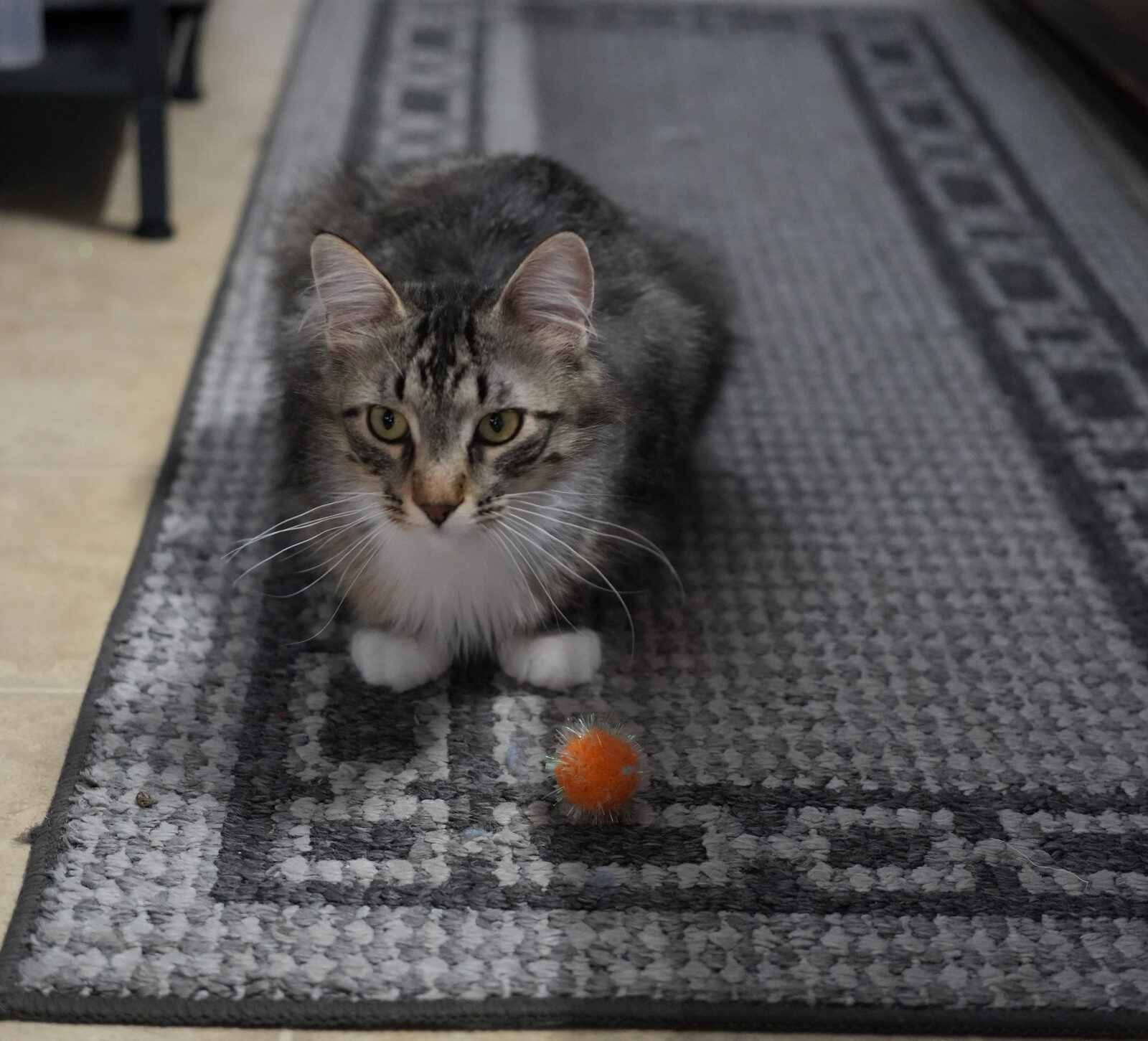
Cat hair isn't one problem, it's eight. The thing that gets it off a fabric sofa does nothing on hardwood, the trick that lifts it off blankets fails on curtains, and the lint roller that's perfect for clothes is the wrong tool for a couch. Most "cat hair tips" articles treat the whole house as one surface. With my 3 cats I learned the hard way that's not how it works.
This is the guide I wish someone had handed me when the hair started showing up everywhere. One section per surface, the tool I actually grab, the cheap backup, and the Reddit trick that may or may not work for you.
Fabric furniture
How to get cat hair off a couch
The best way to get cat hair off a fabric couch is a reusable electrostatic roller like the ChomChom. Roll it back and forth, the static lifts the hair into the chamber, and you dump it when it's full. For hair worked deep into the weave, drag a slightly damp rubber glove across the cushion first.
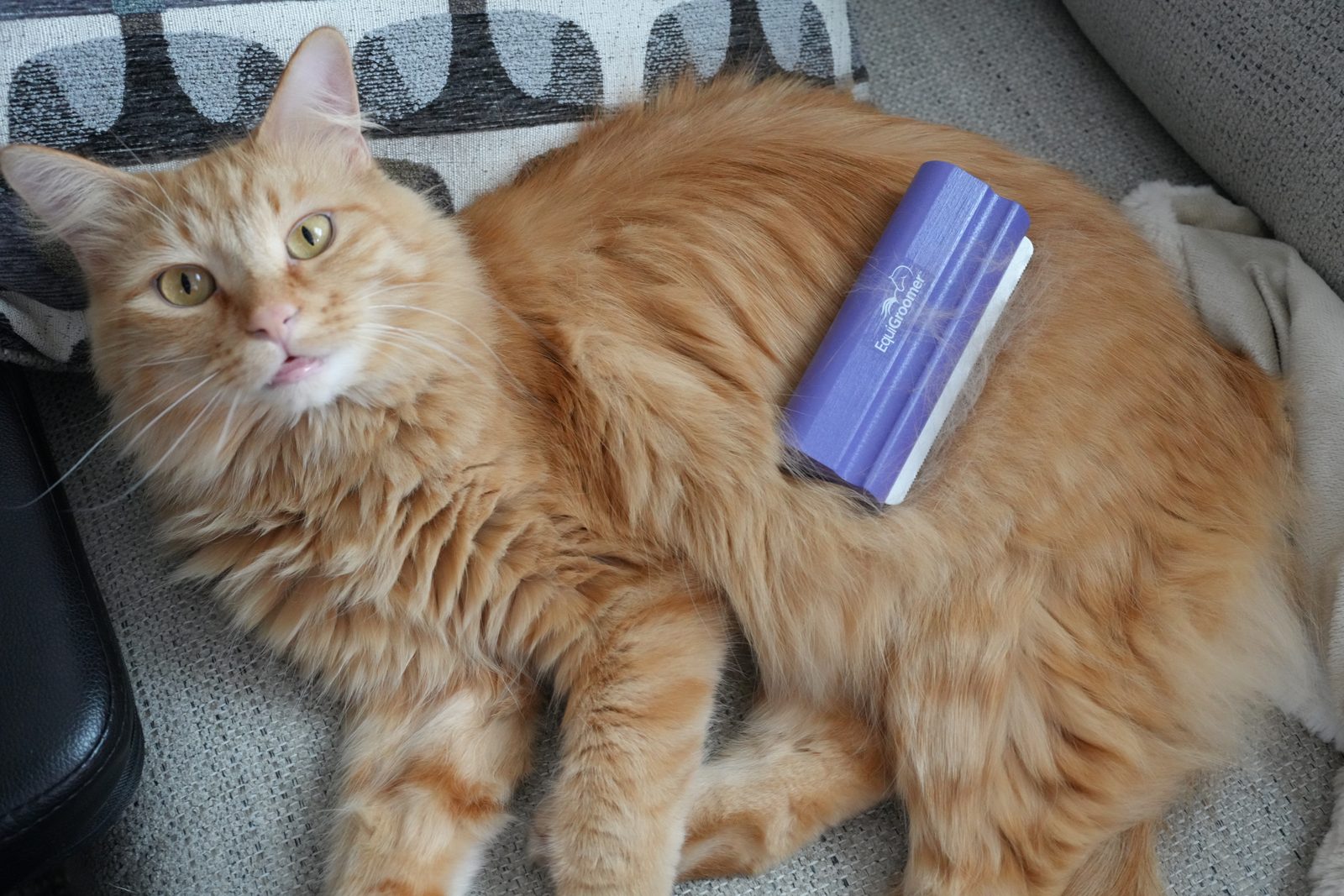
Grab a ChomChom Roller. Roll it back and forth across the cushion, the nylon strip inside builds static, the static yanks the hair off, and it snaps into the chamber. Dump the chamber when it's full. That's the whole job.
A peel-off lint roller is the wrong tool for a whole couch. One sheet covers maybe a square foot, you burn the whole roll before you finish a cushion, and now you've got a stack of sticky paper in the trash. The ChomChom does the same job with no refills and pulls more hair per stroke.
For hair worked deep into the weave, the kind that won't come up with a roller, use a slightly damp rubber kitchen glove. Drag it across the cushion in one direction. The hair clumps as you go. This is one of those Reddit tricks that actually works, and it costs nothing if you already have gloves under the sink.
Finish with a vacuum. A pet-rated vacuum with a brush attachment gets the corners, seams, and that gap behind the back cushions where it all piles up. Two passes in alternating directions if it's bad.
Skip the "pet hair" sprays, the dryer sheets rubbed on cushions, the balloons (yes, that's a real Reddit suggestion). All marginal, all messy. The ChomChom and glove combo already covers it.
Leather
How to get cat hair off a leather couch
On leather, skip the roller and use a slightly damp microfiber cloth. Wipe in one direction, rinse, repeat. Leather doesn't hold a static charge, so electrostatic rollers do almost nothing on it.
Damp microfiber cloth. Wipe in one direction, rinse, repeat. That's it.
Leather doesn't hold a static charge so a ChomChom does basically nothing on it. A peel-off lint roller works but it's slow on a whole couch, and on aniline or full-grain leather you can pull the surface oils over time. A damp microfiber rag is faster, gentler, and free.
If you need to move a lot of hair fast, the static brush attachment on a vacuum hose works on leather where the rolling kind doesn't.
Carpet & rugs
How to get cat hair out of carpet
The best way to get cat hair out of carpet is a pet-rated vacuum with a brush roll, run in alternating directions. For hair worked deep into low-pile, drag a rubber broom over it first to lift the hair to the surface, then vacuum.
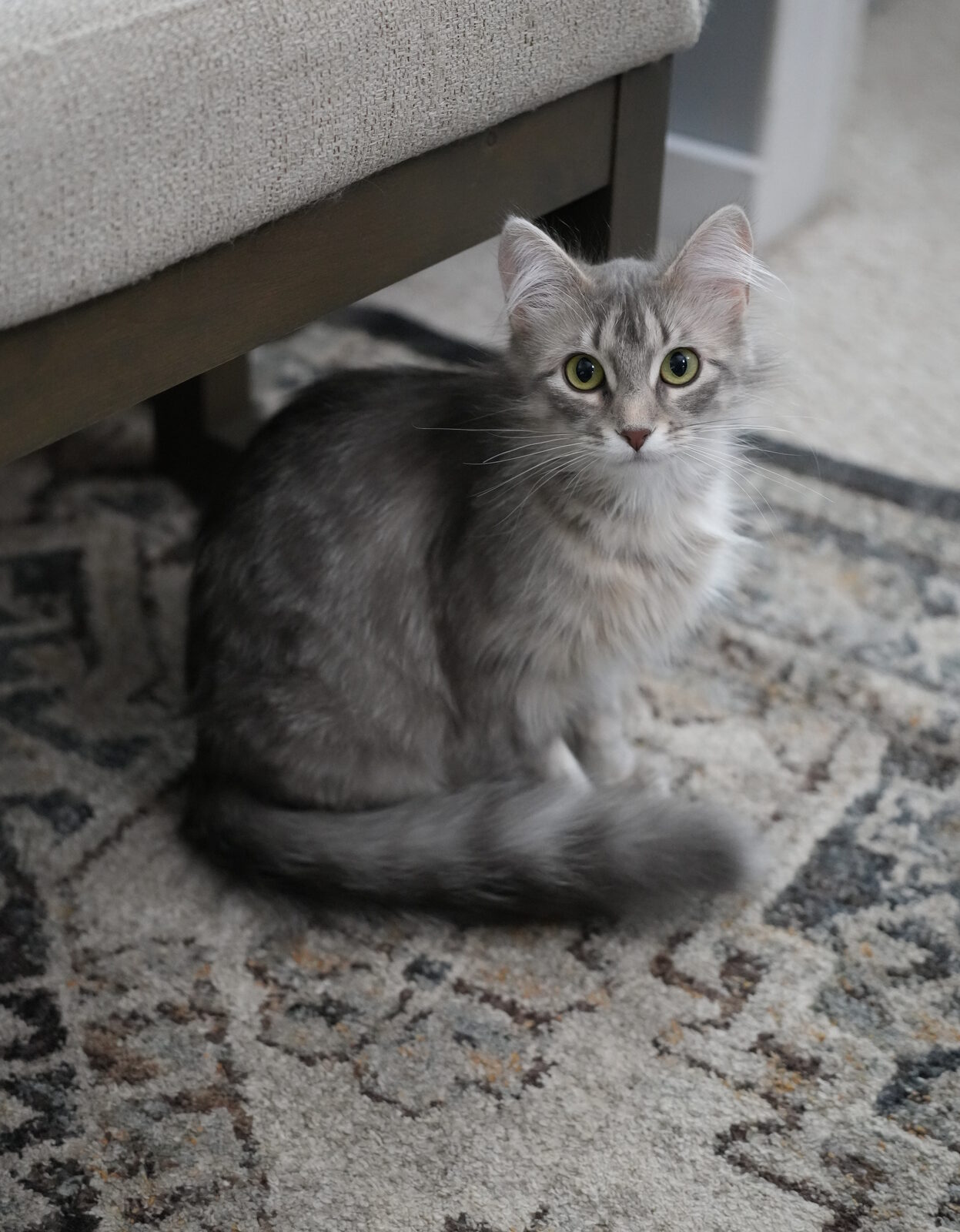
A pet-rated vacuum with a working brush roll. Run it in alternating directions, east-west on one pass, north-south on the next. Hair embeds into carpet from a dozen angles, one direction misses half of it.
For daily upkeep, a robot vacuum with real suction earns its keep. The Dyson 360 Vis Nav handles cat hair on carpet better than every cheaper bot I've owned. The full-width roller pulls hair without tangling and it sucks real good on low-pile. Mid-range Roomba and Eufy bots are fine for surface fluff but they tangle and lose suction fast on anything with depth.
For hair worked deep into low-pile carpet, a rubber broom (FURemover or similar) drags it to the surface where the vacuum can grab it. Sweep first, vacuum after. The combo beats either one alone.
For high-pile and shag, nothing beats a stick vacuum on max suction with a brush attachment. Robot vacuums basically give up on deep pile.
Skip the baking soda trick. Doesn't lift hair, just adds steps.
Hard floors
How to get cat hair off hardwood floors
The best way to get cat hair off hardwood, tile, or laminate is a microfiber dust mop or a robot vacuum with real suction. Never use a regular broom, it throws the hair into the air and onto your furniture.
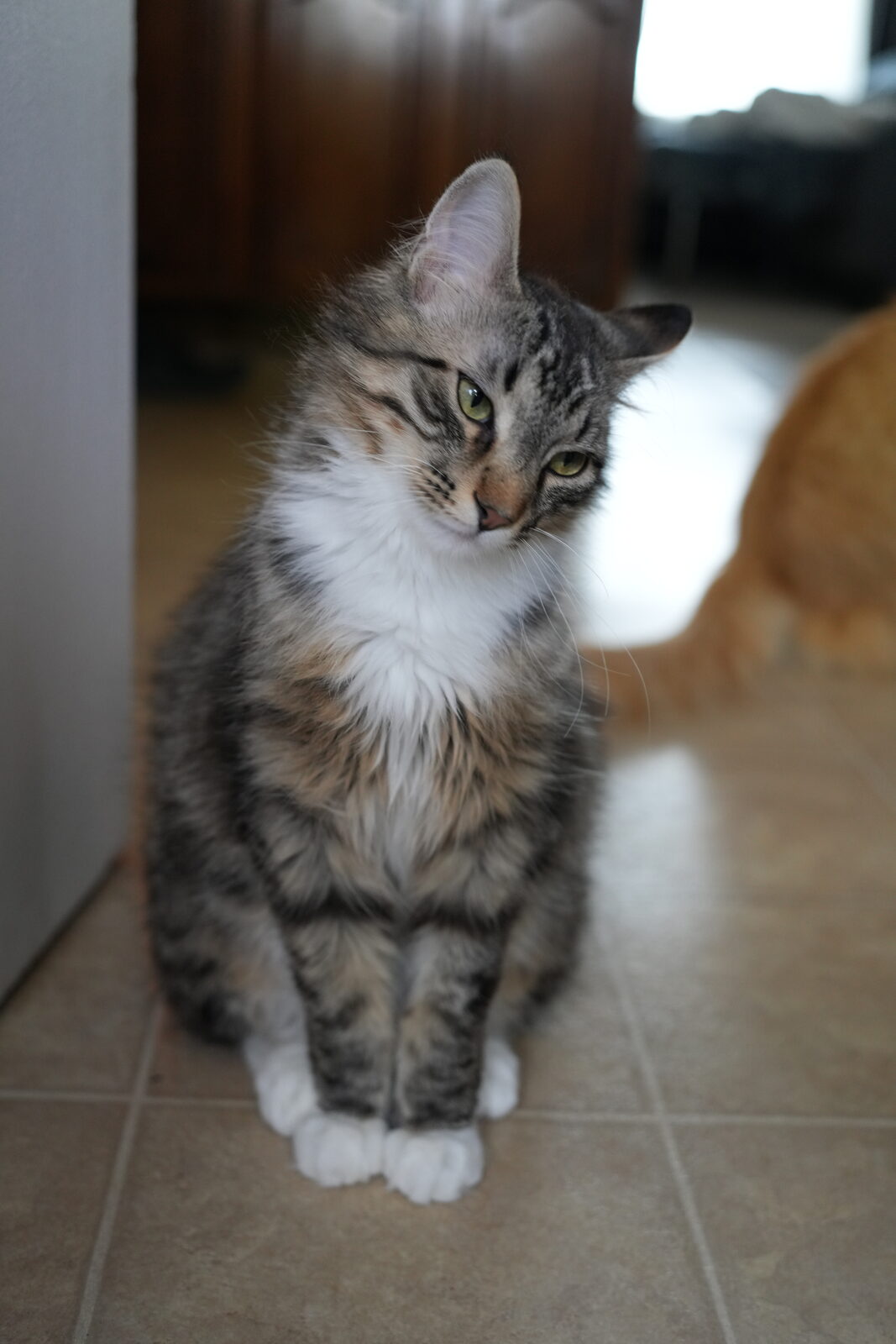
A microfiber dust mop. Or a robot vacuum. In that order.
Cat hair on hardwood clings to whatever has the most static, which is almost always a microfiber pad. Drag a flat microfiber dust mop across the floor in one direction and it picks up basically everything. A Swiffer with a microfiber pad works the same way, the brand barely matters.
Do not sweep hardwood with a regular broom. It throws hair into the air, the hair lands on furniture, and now you've made the problem worse. If a broom is all you have, dampen the bristles first.
For hands-off cleaning, a robot vacuum with real suction (the Dyson 360 Vis Nav, again) does the daily lap. After a few weeks of running it twice a day in my house, hair stops piling up in the corners because the vacuum gets there before I do.
For a deep clean, vacuum first, then run a damp microfiber mop. The damp surface grabs the stragglers that static pulled out of reach.
Clothes
How to get cat hair off clothes
For clothes, a traditional peel-off lint roller is the fastest tool, and extra-sticky ones like Evercare grab more per pass. On black clothes, roll against the grain first to lift the hair, then with the grain to smooth the fabric back down.
A traditional peel-off lint roller. The Evercare extra-sticky ones are noticeably grabbier than the store brands. A peel-off is faster than a reusable rubber roller, stickier on the first pass, and there's no rinsing and drying between strokes.
Keep one by the door, one in the car, one in the laundry room. They're $4 each. The biggest mistake people make is trying to squeeze extra shirts out of one sheet. Sheets lose tack the second you peel them. Don't economize, just peel.
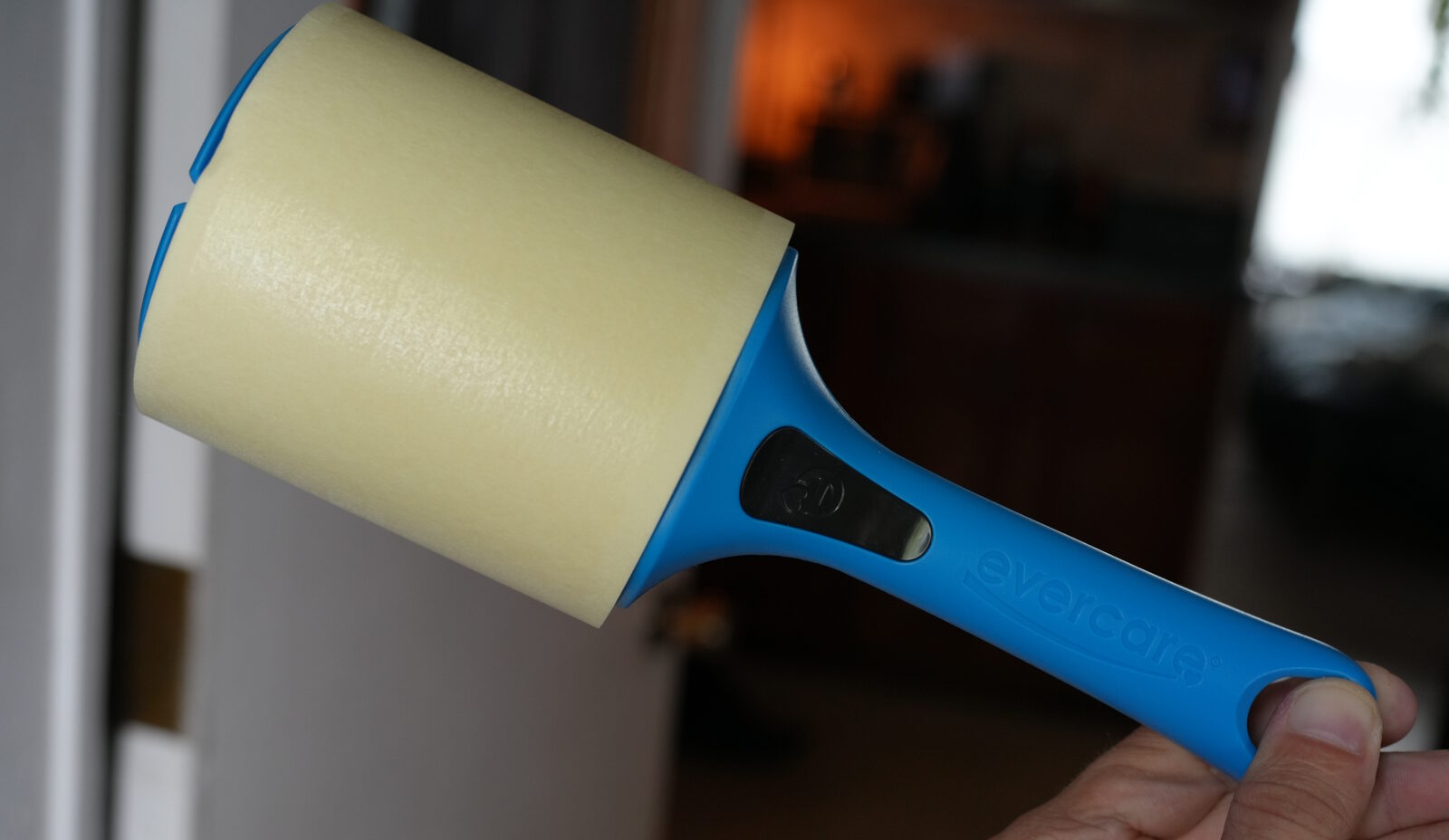
On black clothes, roll against the grain first (hair lifts), then with the grain (fabric smooths back down). Two passes, opposite directions.
For wool, knits, and delicate stuff, a soft-bristled clothing brush is gentler than tape. Cat hair sticks to wool worse than almost anything in my house. Brush first, finish with the lint roller for the holdouts.
Blankets
How to get cat hair off a blanket
The trick almost nobody tries: toss the blanket in the dryer for ten minutes on low or no heat. The tumbling and static pull the hair into the lint trap. Add a FurZapper disc for more lift. For blankets that aren't dryer-safe, a ChomChom Roller works on the flat surface.
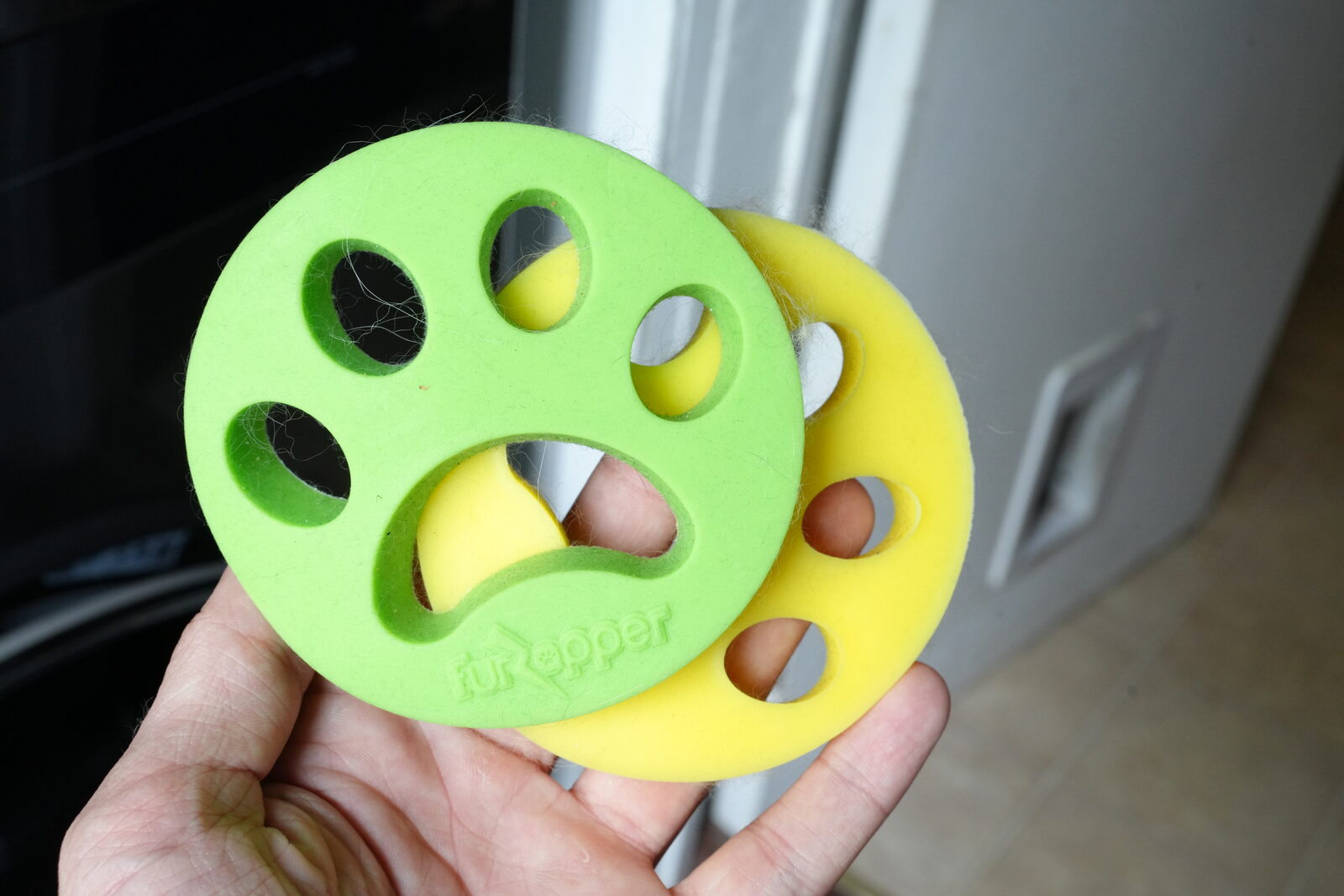
The trick almost nobody tries: toss the blanket in the dryer for 10 minutes on low or no heat. Tumbling and static pull the hair into the lint trap and the blanket comes out visibly cleaner. Throw a FurZapper in for more lift.
For blankets that aren't dryer-safe, a ChomChom Roller works on the flat surface the same way it does on the couch.
For chunky knit and weighted blankets, dryer trick first, then roll. Vacuuming a chunky blanket in place just tangles the loops.
Fleece and Sherpa grab hair the worst, but the dryer trick still helps. Long-term, just designate one cat-blanket and wash it twice a week instead of fighting to keep hair off a nice throw. Some battles aren't worth it.
Want the fan update when I find something?
I'll only email when there's a real recommendation worth sharing. No weekly newsletter, no spam.
One-tap unsubscribe in every email. See the privacy policy.
Bedding
How to get cat hair off sheets and bedding
With bedding the fabric is the problem, not the routine. Cotton-poly and brushed microfiber grab hair and won't let go. Smooth, tightly woven fabrics like nylon, bamboo sateen, and percale let it brush off. To pull hair out of existing sheets, run a FurZapper through the wash and dryer.
The fabric is the problem, not the routine. If your sheets are a cotton-poly blend or brushed microfiber, no cleaning method short of replacement keeps them hair-free for long. Smooth, tightly woven fabrics like nylon, bamboo sateen, and percale let hair brush off instead of embed.
Full breakdown is in the cat hair resistant bedding guide, with macro photos of cotton vs slick weaves so you can see the difference at the fiber level. Short version, swap your pillowcases first if budget is tight. They touch your face, they show hair instantly, they're the cheapest part to replace.
For pulling hair out of existing sheets, a FurZapper in the wash and dryer, run twice if it's bad. Brushed microfiber pillowcases will keep coughing up hair for several wash cycles after you stop using them. That's how deep it embeds.
Curtains
How to remove cat hair from curtains
For curtains, use a lint roller on a long handle or a vacuum with a soft brush attachment, working top to bottom. If they're washable, tumble them in the dryer for ten minutes on no heat first and most of the hair drops into the lint trap before you even wash them.
A lint roller on a long handle, or a vacuum with a soft brush attachment. Top to bottom.
Curtains are the surface everyone forgets. Air movement and static both push hair toward them, and most curtain fabric is loose enough to hold it. If they're washable, throw them in the dryer for 10 minutes on no heat before the next laundry day. Most of the hair drops into the lint trap before you ever wash them.
For sheer or delicate curtains, the static brush attachment on a vacuum hose works without pulling threads.
Long-term, linen and tightly-woven cotton curtains hold hair way less than velvet or microfiber blackout fabric. If you're replacing curtains anyway, that's a reason to skip plush fabrics next round.
Car
How to get cat hair out of a car
The surprise winner for cloth car seats is a pumice stone, rubbed gently across the fabric, it catches hair no roller picks up. Vacuum the seams with a crevice tool first, then the pumice stone for embedded hair, then a ChomChom for the top-layer fluff.
A pumice stone, this one surprised me. Rubbed gently across cloth car seats, it catches hair the way no roller does, and the hair clumps right up where you can grab it. The stone wears down, but a $5 pumice stone outlasts a year of weekly cleanups.
For a full cleanup, vacuum with a crevice tool first (the seams hide the worst of it), then the pumice stone for embedded hair, then a ChomChom on the top-layer fluff.
Leather car seats, damp microfiber cloth, same as a leather sofa.
For floormats, rubber mats are way easier to clean than cloth. If you're replacing yours, switch.
Laundry
How to get cat hair out of the washing machine
Drop a FurZapper silicone disc in the wash and leave it in through the dryer cycle. It gives loose hair a tacky surface to grab, so the hair ends up rinsed down the drain or in the dryer's lint trap instead of redistributed across the load. One disc per pet.
A FurZapper silicone disc. Throw one in the wash, leave it in through the dryer cycle.
Hair survives a wash and ends up redistributed across the rest of the load because the agitator has nowhere to send it. A silicone disc gives the loose hair a tacky surface to grab, and it ends up either rinsed down the drain or shoved into the dryer's lint trap.
One disc per pet. With my 3 cats that's 3 discs. The manufacturer says the same thing and it checks out, a single FurZapper in a heavy-shed load gets overwhelmed fast.
Dryer sheets? They help a little with static, which helps a little with hair release. Bounce Pet Hair Mega Sheets are fine but honestly I can't tell they do more than regular dryer sheets.
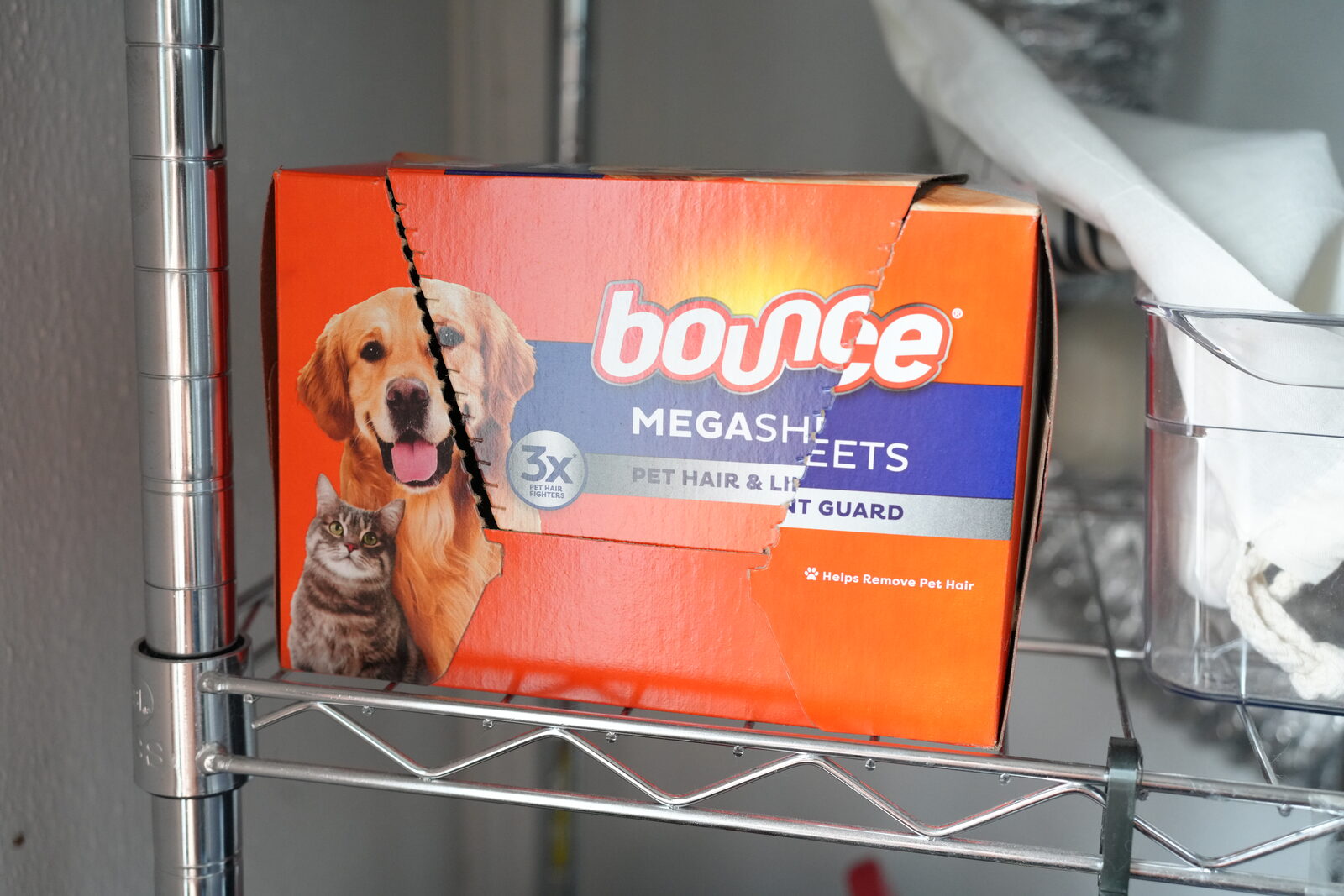
Clean the lint trap every load. A clogged trap blocks airflow and dramatically cuts how much hair ends up there. Sounds obvious, people still forget.
The kit
The full cat-hair tool kit
Buy everything on this list and you're at about $60 plus the vacuum, covering every surface in the guide. Nothing overlaps, each tool earns its keep on a different surface.
| Surface | Best tool | ~Cost | Where I keep it |
|---|---|---|---|
| Fabric sofa | ChomChom Roller | $25 | Living room |
| Carpet | Pet-rated vacuum / Dyson 360 Vis Nav | $200 to $700 | Closet |
| Hardwood | Microfiber dust mop | $15 | Pantry |
| Clothes | Evercare lint roller | $8 | Door, car, laundry. One each. |
| Blankets | Dryer + FurZapper | $15 | Laundry |
| Bedding | Slick fabric (REST or bamboo sateen) | $60 to $220 | The bed itself |
| Curtains | Vacuum brush attachment | (included) | |
| Car seats | Pumice stone | $5 | Glove box |
| Washing machine | FurZapper silicone disc | $15 | Inside the dryer between loads |
Full reviews of each product are on the main cat hair guide and the bedding guide. For the head-to-head, see my ranked roundup of the best cat hair removers I've tested.
A couple of surfaces get their own deep dives: a dedicated guide for outdoor cushions and patio furniture, and one for cat hair in your keyboard and electronics.
Frequently asked
FAQ
What is the best way to remove cat hair from a sofa?
A reusable electrostatic roller like the ChomChom is the most effective single tool for fabric sofas. The static charge lifts hair off the fabric without picking up lint or moving the cushion. For embedded hair worked deep into the weave, a slightly damp rubber glove drags hair into clumps that are easy to pick up. Vacuum with a brush attachment for corners and seams.
What is the best way to remove cat hair from carpet?
A pet-rated vacuum with a working brush roll, run in alternating directions. Robot vacuums like the Dyson 360 Vis Nav handle daily maintenance well. For embedded hair on low-pile carpet, a rubber broom drags hair to the surface where the vacuum can grab it.
What is the best way to remove cat hair from clothes?
A traditional peel-off lint roller. Evercare and similar brands are stickier than store-brand rollers and faster than reusable rubber-roller alternatives like the Sticky Buddy. For laundry, a FurZapper silicone disc in the wash and dryer pulls more hair into the lint trap than dryer sheets alone.
What is the best way to remove cat hair from hardwood floors?
A microfiber dust mop or a robot vacuum with real suction. Avoid sweeping with a regular broom on hardwood. It scatters hair into the air and makes the problem worse. A damp microfiber mop after vacuuming catches the static-clinging stragglers.
What is the best way to remove cat hair from blankets?
Toss the blanket in the dryer for ten minutes on low or no heat. Tumbling plus a FurZapper disc pulls most hair into the lint trap. For non-dryer-safe blankets, a ChomChom Roller on the flat surface works the same way it does on a sofa.
Does a damp rubber glove really work on cat hair?
Yes, particularly for embedded hair on fabric upholstery. Drag a slightly damp rubber kitchen glove across the surface in one direction. Hair clumps as you go. It is the only no-cost trick on this list that delivers on the hype.
What is the best way to remove cat hair from car seats?
A pumice stone, surprisingly. Rubbed gently across cloth car seats, it catches hair that no roller picks up. Combine it with a vacuum crevice tool for the seams and a ChomChom Roller for top-layer fluff.
What is the best way to remove cat hair from a washing machine?
A FurZapper silicone disc, one per pet, run through both wash and dryer cycles. The disc gives loose hair a tacky surface to stick to, so it ends up rinsed down the drain or pushed into the dryer's lint trap rather than redistributed onto other clothes.
How do you get rid of cat hair in the house?
There's no single tool, because cat hair isn't one problem. Match the tool to the surface: a ChomChom Roller on fabric furniture, a peel-off lint roller on clothes, a microfiber dust mop or robot vacuum on hard floors, a FurZapper in the laundry, and slick tightly-woven bedding so hair brushes off instead of embedding. Brushing the cat with a deshedding tool a couple times a week cuts how much ends up everywhere in the first place.