Why Cat Hair Is Worse on Hardwood (and What Actually Works)
On carpet, hair gets tangled into fibers and stays put. On hardwood, there's nothing holding it down, so it floats at the slightest air current and you spend your weekends chasing it. Here's the interception fix.
If you have hardwood floors and cats, you've already noticed: the floor looks fine right after you vacuum it, and within an hour there's hair drifting along the baseboards. You didn't miss any. The hair just moved. On hardwood, hair is always in motion, and standard floor-cleaning advice (vacuum, Swiffer, repeat) is reactive, you're chasing the hair instead of catching it.
The fix isn't more cleaning, it's interception. A floor level fan with a mesh cover near where your cats spend the most time pulls hair-laden air through the mesh while the hair is drifting, before it lands on the next surface. It sounds like an odd answer until you watch the mesh load up in 2 days and realize all that hair would have ended up under the couch, on your clothes, or on the floor of the next room.
The physics
Why hardwood, tile, and laminate amplify the problem
Carpet is a forgiving surface for cat hair. The fibers grab loose hair and hold it in place, sometimes too well, but at least the hair is somewhere predictable. You vacuum the carpet, the hair is gone for a while, the next batch shows up over the course of days.
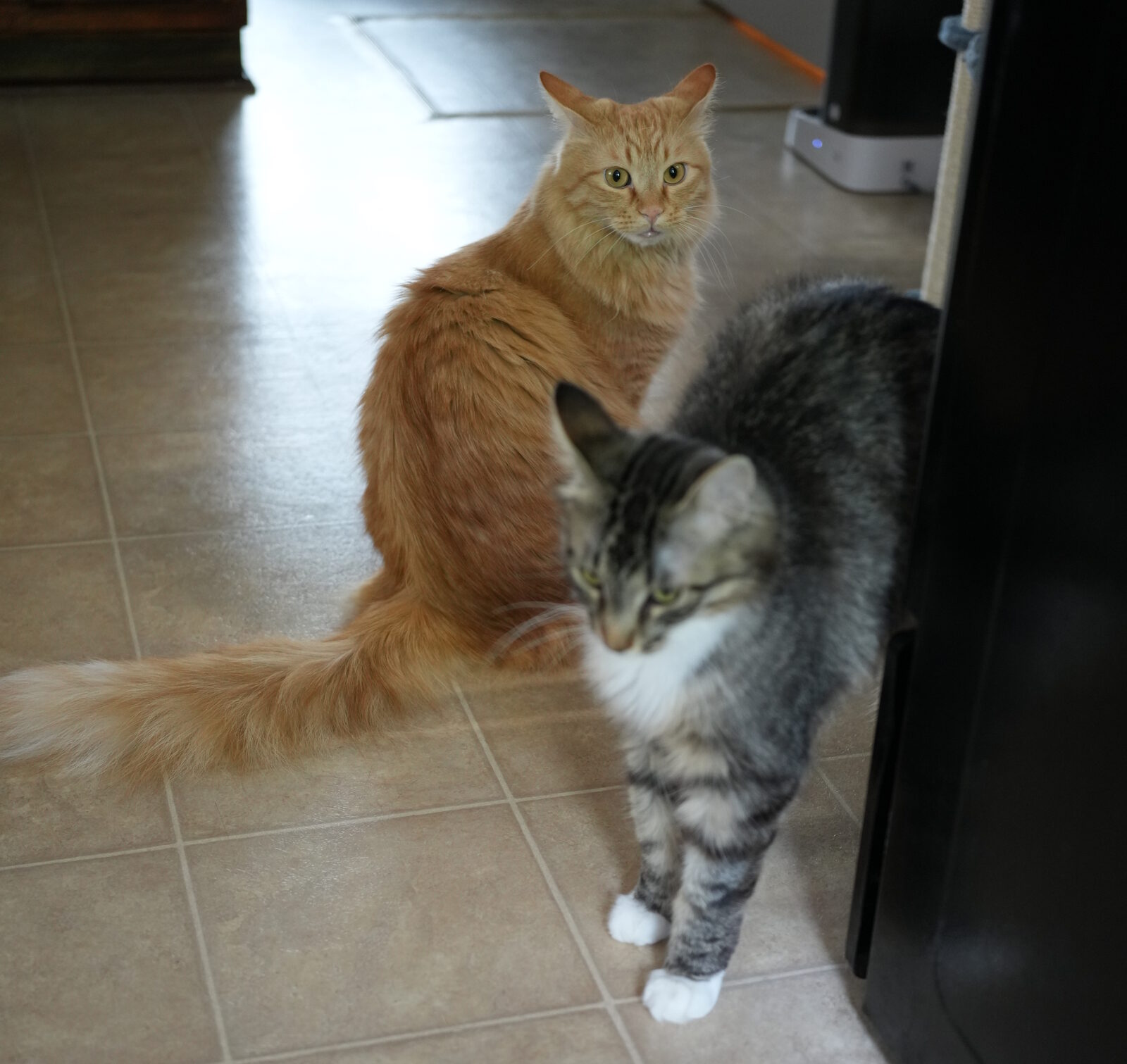
Hardwood is the opposite. The surface is smooth, hard, with nothing to anchor a hair. A strand sheds off Herbie sleeping on the couch, lands on the hardwood, and sits there until the slightest air movement sends it skating. A cat walks past, the HVAC turns on, you open a door, a fan kicks on. Each of those creates enough draft to lift the hair and send it tumbling. It eventually settles somewhere, gets kicked up again, settles, gets kicked up. The hair is always in motion.
This is why hardwood-floor cat owners are the most frustrated. The visible hair on the floor isn't just shedding-and-settling, it's shedding-and-circulating. You vacuum the kitchen and the hair from the kitchen ends up in the living room twenty minutes later because the cats walked through it.
Tile and laminate behave the same way. Anything smooth and hard. Polished concrete in modern places is the worst of all, the surface is so slick that hair almost glides on it.
What doesn't fully work
The reactive tools and why they lose
Brooms. Skip these. A traditional broom with stiff bristles launches as much hair into the air as it sweeps. You finish sweeping, an hour later there's hair drifting again, this time in different rooms.
Swiffer dry cloths. They work for what they catch, but they're slow and they only get the hair that was on the floor at that exact moment. The hair the Swiffer didn't catch is now drifting because you stirred up the air walking around. Net result: you Swiffer for ten minutes, the floor looks great for an hour, then the hair you missed re-settles and you're back where you started.
Vacuuming. Better than brooms or Swiffers because the suction pulls the hair in and traps it, but it's still reactive. You stop vacuuming, the cats keep shedding, the cycle restarts. A regular vacuum is also work to deploy, so most pet owners run it once or twice a week, way less often than the shedding rate demands.
Robot vacuums (with strong suction). The first tool on this list that meaningfully changes the game. A Dyson 360 Vis Nav running twice a day pulls visible amounts of hair off hardwood every single cycle. The cheaper bots without real suction skim and miss. Suction is the spec that matters here. The full Dyson 360 review covers months of daily runs in this exact setup.
The fix
Catch the hair while it's in the air
The thing nobody else writes about: you can catch hair on hardwood floors before it ever lands on the floor. The hair is always in motion anyway. So put something in its path that grabs it.
The setup: a floor level fan, on the floor, near where your cats spend the most time. With a FurStopper Fan Filter mesh cover on the front. The fan pulls air from the bottom 18 inches of the room, exactly where the drifting cat hair lives, and the mesh on the front catches the hair as the air passes through it.
I run a Vornado-style air circulator with a Fan Filter on it in the corner where Herbie naps, low to the ground. The mesh fills up visibly between washes. Every strand on the mesh would have ended up on the hardwood, gotten kicked around, ended up on a sock or stuck to a pant leg, or gotten picked up by the robot vacuum on its next run. By catching them in the air I never have to deal with them on the floor.
This is the part that surprises people. The hardwood floors actually get more benefit from this approach than carpet would, because the hair is freely available to be pulled into the fan. On carpet the hair is anchored in the fibers, the fan can't pull it out. On hardwood the hair is sitting on top with nothing holding it down, and the fan grabs whatever is drifting past.
The setup that works
The hardwood-floor cat-hair stack
Here's what I run in this house, in order of how much they each contribute to keeping the hardwood actually clean.
- Floor level fan with a Fan Filter near the cats. Any compact air circulator in the corner the cats use, low to the ground, plus a FurStopper Fan Filter on the front. Catches hair while it's drifting, the mesh fills up between washes. The single highest-leverage tool in the stack.
- Robot vacuum on a twice-a-day schedule. Dyson 360 Vis Nav for the under-the-couch hair the fan doesn't get. The combo of fan-interception plus floor-level pickup catches both the drifting hair and the settled hair. Full review of the Dyson 360.
- Microfiber dust mop for spot work. $15 reusable mop with a microfiber pad that grabs hair without launching it. Run it through the kitchen and entryway in 30 seconds when you need a quick pass before company comes over. Doesn't replace the bot, complements it.
- Brushing the cat upstream. An EquiGroomer session twice a week per cat pulls visible chunks of loose undercoat that would otherwise end up on the floor. Cuts the floor load roughly in half. Brushing is the most underrated cat hair tool in the house.
The full surface-by-surface guide is on the remove cat hair guide. For the rest of the air problem, the Air & Fans hub covers the dander side.
More cat hair gear coming
Working through the rest of the gear in my 3 cat house. Drop your email if you want updates when something new earns a spot.
One-tap unsubscribe in every email. See the privacy policy.
Frequently asked
FAQ
Why is cat hair worse on hardwood floors?
Hardwood, tile, and laminate are smooth, hard surfaces with nothing to anchor a hair. On carpet, cat hair gets tangled into fibers and stays put. On hardwood, hair sits on top until the slightest air movement sends it sliding. A cat walking past, the HVAC kicking on, an open window, a fan, all keep the hair circulating instead of letting it settle. That's why hardwood always looks dirty an hour after vacuuming.
What's the best way to clean cat hair off hardwood floors?
A robot vacuum with strong suction is the best floor tool. The Dyson 360 Vis Nav handles it on a daily schedule. A microfiber dust mop captures hair without launching it back into the air. But the more effective fix is interception: run a floor level fan with a Fan Filter near where your cats spend the most time. The fan pulls hair-laden air through the mesh while it's drifting, catching it before it lands on the next surface.
Does a Swiffer work for cat hair on hardwood?
It works, but it's reactive. The Swiffer dry cloth catches surface hair when you push it across the floor. The hair you didn't catch in the kitchen is now hair drifting in the living room because the cat just walked through it. A reactive tool can't keep up. The fix is to combine: a robot vacuum or microfiber dust mop on schedule for the floor itself, plus a Fan Filter on a floor level fan to intercept hair while it's drifting.
Will a robot vacuum keep up with cat hair on hardwood?
If it has real suction, yes, on a twice-a-day schedule. The Dyson 360 Vis Nav runs in my house twice a day and the bin comes out full of hair every cycle. Cheaper robots without strong suction skim the surface and miss the under-couch hair piles. For pet owners with hardwood, suction is the spec that matters, not mapping or app features.
What's the cheapest way to handle cat hair on hardwood floors?
A microfiber dust mop ($15) for the floor itself, plus a fan you already own with a FurStopper Fan Filter on it. The mop catches hair without launching it back into the air the way a broom does, and the fan plus mesh cover intercepts hair while it's still drifting. No robot vacuum needed if you don't want one.
This page is part of the remove cat hair guide. For the upstream side (less hair on the floor in the first place), the best brush guide and FURminator vs EquiGroomer cover what to do about the hair before it ever sheds onto the floor. For the rest of the air problem, the air purifier vs fan comparison covers the math.