Fall Cat Shedding: What to Expect From the Second Molt of the Year
Fall is the lighter molt. Cats drop the thin summer coat to make room for the winter one growing in underneath, and the whole thing wraps up in 3 to 4 weeks.

Most people don't even notice fall cat shedding until they brush the cat in October and the EquiGroomer fills up faster than it has all summer. Fall is the second molt of the year, and it's lighter than spring, but it's a real molt. The cat sheds the thin summer coat first so the thicker winter coat can grow in behind it. Counterintuitive, but that's the order of operations.
This is part of the main cat hair guide. The companion piece is spring cat shedding, which is the big one. Fall is its quieter cousin, 3 to 4 weeks in September through November in most of the Northern Hemisphere, less dramatic than April but worth knowing about so you don't panic when the brush starts filling up again.
The trigger
Why cats shed in fall (it's not what you think)
The trigger isn't temperature, it's daylight. As days shorten in September, the photoperiod cue tells your cat's body it's time to swap coats. Cats don't grow the new winter coat first and then drop the summer coat, they do it the other way around. The summer hair has to come out so the follicles can push a denser, fluffier winter undercoat through behind it.
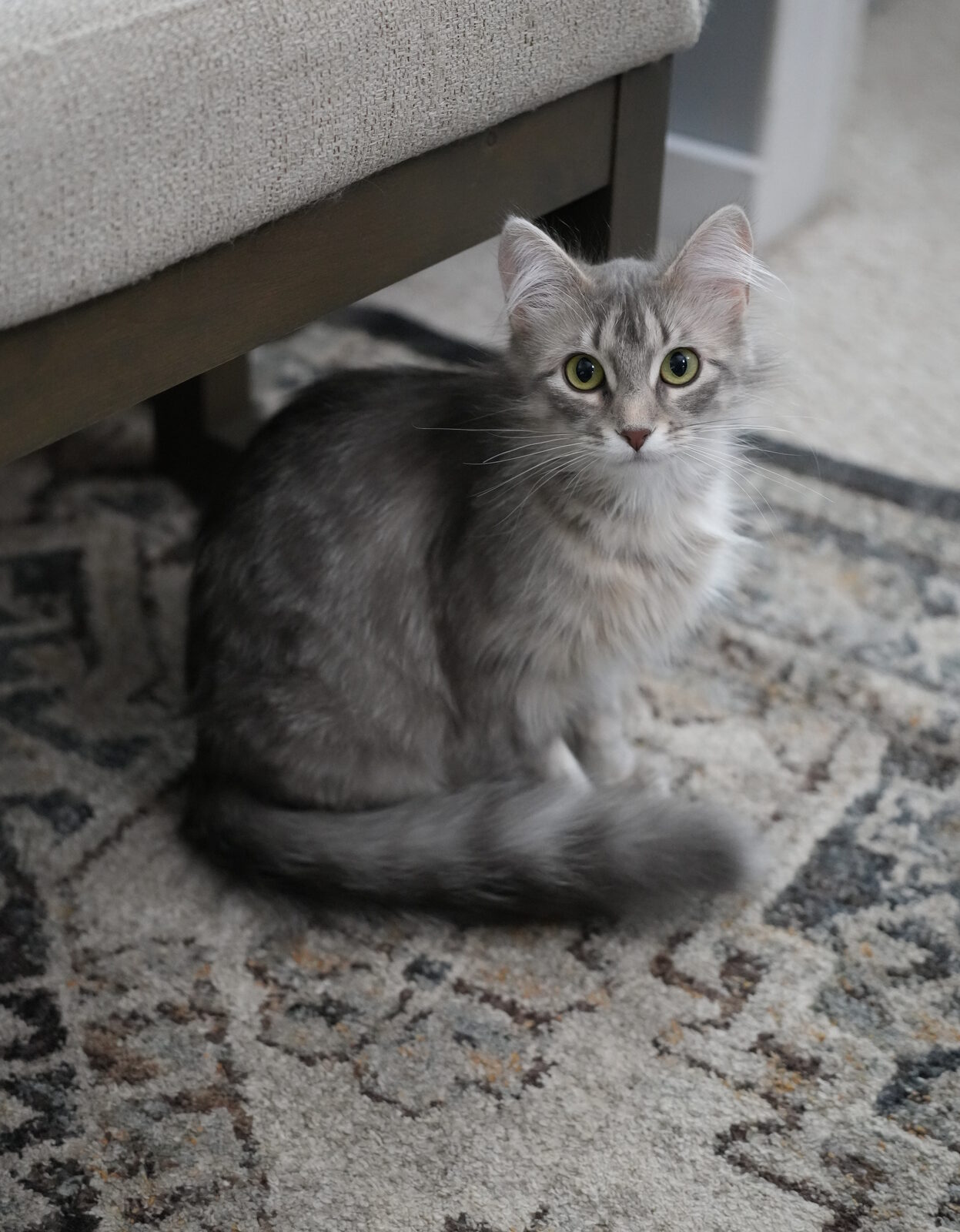
That's why a cat in early October can look like she's shedding more than usual but the coat looks the same or thinner, the new winter growth hasn't filled in yet. Give it 4 to 6 weeks and the coat is visibly thicker than it was in August. Luna is the obvious one in my house, her silver longhair fluffs up between Halloween and Thanksgiving like someone inflated her, and the brush volume in October is the price for that December coat.
Indoor cats run on a muted version of this cycle because artificial light dampens the daylight signal. A cat that lives under house lights and never sees natural daylight basically smears the shedding across the year, no clean spring or fall molt. Cats that sit in windows still get the cue, just blunted. My 2 outdoor rescues, Leo and Luna, have visible fall molts on the calendar. Herbie, who has been indoors since he was a kitten, has a small fall bump and otherwise sheds steadily year-round.
Fall vs spring
How fall differs from spring
Spring is the big molt. The cat is dumping the dense winter undercoat that built up over 4 or 5 months, the volume is dramatic, and the duration runs 4 to 6 weeks of obvious shedding plus a tail of lighter shed after that. The pile in the brush at the end of a 5 minute session in April can be the size of a softball on a longhair. The shedding is loud, it's everywhere, you find tumbleweeds under the furniture you didn't know existed.
Fall is the smaller cousin. The summer coat is thinner to begin with, so there's less hair to drop. The duration is shorter, 3 to 4 weeks in most cats. The pile in the brush is real but it's a fraction of the spring volume, more like a tennis ball than a softball on Herbie. You'll notice it on the brush long before you notice it on the couch. Spring is when guests sit on your sofa and stand up wearing fur, fall isn't usually that intense.
The other practical difference, the spring molt overlaps with cleaning season and people are already paying attention. The fall molt sneaks up because nobody's thinking about cat hair in October, they're thinking about pumpkins. So you brush less, the loose hair builds up in the coat, and 2 weeks in you suddenly find a tangle on a longhair behind a back leg. The fix is just being aware the molt is happening.
Timing
How long fall shedding lasts
3 to 4 weeks of noticeable shedding, somewhere in the September to November window. The exact timing depends on your latitude and your cat. Cats further north start a couple of weeks earlier because daylight shortens earlier up there. Outdoor and indoor-outdoor cats run tight to the calendar because they're getting the full photoperiod signal. Indoor cats can drift, sometimes you'll see a cat shed lightly from August through December instead of having a clean 3 to 4 week peak.
In my house the pattern lands in early October and wraps by the first week of November. By Thanksgiving Herbie's coat is visibly thicker, Luna looks twice as fluffy as she did in August, and the brushes are back to baseline. After that the shedding is just normal year-round drop until April rolls around and the spring molt kicks in.
If you're seeing heavy shedding stretch past 4 to 5 weeks, or it doesn't slow down by the end of November, that's worth paying attention to. Steady year-round shedding without a peak can be a coat-cycle issue, a diet issue, or a stress issue. The seasonal pattern should taper, if it doesn't, the excessive shedding guide walks through what to check.
What to do
What to do during fall molt
Fall is the same routine as spring at lower intensity. 2 to 3 brushing sessions a week with an EquiGroomer is enough on most cats, daily during the peak week if your cat tolerates it. 5 minutes per cat per session, in the direction of the fur, no skin contact. Fall molt is light enough that you don't need to escalate to the FURminator unless you have a particularly thick-coated cat that's struggling.
Vacuum once or twice a week instead of once a day, the volume on floors and furniture is lower than spring. The Dyson 360 Vis Nav running on schedule handles most of it without me thinking about it, the full review covers why I switched. Lint roll clothes before going out, an Evercare peel-off roller stays the simple answer, the Evercare review has the why.
Keep an eye on coat condition. The new winter coat coming in should look healthier than the summer coat going out, not duller. If the new growth looks thin, brittle, or scurfy, that's a coat-quality issue worth raising with the vet, not a shedding issue. The molt itself isn't a health problem, the quality of what's growing in afterward is the actual signal.
Notes from the next molt
I track fall and spring shedding in my three-cat house and write up what worked. Drop your email if you want the seasonal updates and the gear that earns its spot.
One-tap unsubscribe in every email. See the privacy policy.
Stress check
Stress shedding vs seasonal shedding in fall
Fall lines up with a pile of household stress triggers. Kids back to school changes the daily rhythm, daylight saving shifts feeding times, weather changes mean the windows close and the heating comes on, holiday prep brings strangers and furniture rearrangement. Some cats roll with all of it, some cats stress-shed in response. The stress shed and the seasonal shed can show up at the same time, which makes it hard to tell which is which without looking carefully.
The tell is pattern. Seasonal shedding is even across the body, the cat's behavior is normal, and the brush picks up loose undercoat from everywhere. Stress shedding clumps. You'll see hair coming out from one flank, a bald patch behind the ear, or scabby skin under the chin where the cat is overgrooming. The cat's behavior shifts too, more hiding, less appetite, more vocalization, fewer biscuits made on your lap.
If you're seeing seasonal shedding plus normal cat behavior, you're fine, brush through it. If you're seeing patchy hair loss, scabs, overgrooming, or a behavior change, that's not the molt and a vet visit is the next step. Skin issues mimic stress shedding and the other way around, only a vet sorts that out.
The tools
What to brush with
Fall is light enough that you don't need a different toolkit than the rest of the year. The EquiGroomer 5 inch stays the daily driver in my house, gentle enough that all 3 cats sit through it and wide enough that the head covers a lot of coat per stroke. 5 minutes a session, 2 or 3 times a week, that's the whole protocol for fall on a shorthair.
Longhairs need the comb work too. A steel greyhound comb run through the belly and behind the back legs once a week catches tangles before they lock into mats, and longhairs are exactly where fall shedding causes the most trouble because the loose hair stays in the coat instead of falling out. The long-haired brush guide covers the full longhair kit.
The FURminator stays in the drawer for fall in most cases. I pull it out for spring on Leo, and that's it. Fall volume is low enough that the EquiGroomer keeps up without escalating to the heavier tool.
Frequently asked
FAQ
Do cats shed in fall?
Yes. Fall is the second molt of the year. Shortening daylight in September tells the cat's body to drop the thin summer coat to make room for the thicker winter one coming in underneath. It's lighter than the spring shed and shorter, but it's a real molt and you'll see the pile in the brush. In my three-cat house with 2 longhairs, fall shedding shows up as a 3 to 4 week stretch where the brushes fill up faster than usual.
When does fall shedding start in cats?
Late September into early October in most of the Northern Hemisphere, peaking through November. The trigger is photoperiod, the number of daylight hours per day, not temperature. As days shorten, the cat's body starts releasing the summer coat. Indoor-only cats run on a muted version of the same cycle because artificial light dampens the signal. Outdoor cats and indoor-outdoor cats show the timing more cleanly.
Is fall shedding heavier or lighter than spring shedding?
Lighter. Spring is the big one. The cat is dropping the dense winter undercoat that built up over months, so the volume is dramatic and the duration runs 4 to 6 weeks. Fall is the cat dropping a thinner summer coat to make room for the winter one, so the pile is smaller and the molt wraps up in 3 to 4 weeks. Same mechanism, smaller scale. Both my longhairs Herbie and Luna fill the brush more in April than in October.
Why do cats shed when getting their winter coat?
Counterintuitive but real. The new winter coat doesn't push the summer coat out, the cat releases the summer coat first to make space for the new growth. Hair follicles can't grow a denser, fluffier replacement while the lighter summer hair is still anchored. So the body drops the summer hair on a coordinated cycle starting in early fall, and the winter undercoat grows in behind it over the following weeks. By December the coat is thicker than it was in August because of what came in, not because nothing left.
How long does fall cat shedding last?
Usually 3 to 4 weeks of noticeable shedding, somewhere in the September to November window depending on your latitude and your cat's individual cycle. Outdoor cats are tighter on this timing because they're getting the full daylight signal. Indoor cats can stretch the shed out longer or smear it across more of the year because artificial light keeps the photoperiod cue muddled. Once the new winter coat is in, the shedding drops to baseline until spring.
Do indoor cats shed in fall?
Yes, just less dramatically. Indoor-only cats live under artificial light most of the day, which softens the photoperiod cue that drives the seasonal molt. The fall shed still happens because cats kept on regular daylight exposure (any cat that sits in a window) still gets the signal, but it's blunted compared to an outdoor cat. The pattern in my house, Herbie (indoor since kittenhood) sheds steadily year-round with a small fall bump, the 2 outdoor rescues (Leo and Luna) have visible fall molts on the calendar.
Is excessive fall shedding a sign of stress?
Sometimes. Fall lines up with a lot of household stress triggers. Kids back to school, daylight saving change, weather shifts, holiday prep with strangers in the house. Stress shedding looks different from seasonal shedding. It comes with overgrooming, bald patches, scabs, or hair coming out in clumps from one spot rather than evenly. Seasonal shedding is even across the body and the cat's behavior is normal. If your cat is licking one flank raw or losing hair in patches, it's not the molt, it's stress or a skin issue and worth a vet visit.
Should I change my cat's diet for fall shedding?
Not for the shed itself. A cat already eating a complete commercial food has the building blocks to grow a winter coat. The molt happens whether you supplement or not. Where diet matters is coat quality, an omega-3 boost (a fish oil pump on food, or a food formulated with EPA and DHA) supports skin and coat condition over months, not the volume of any single shed. If your cat's coat looks dull or dandruffy heading into fall, talk to your vet about supplements. If the coat looks fine, the food is fine.
Will my cat shed less in fall if I brush them daily?
The cat sheds the same amount of hair either way, brushing just decides where the hair lands. Daily brushing during the fall molt moves a 3 to 4 week shed off your couch and into a trash bag. The cat still drops the summer coat on the same biological schedule, you're catching it before it spreads. 5 minutes a day with an EquiGroomer or 10 minutes every other day is plenty for fall, less than the spring cadence because the volume is lower.
Fall shedding is the smaller of the two molts and the easier one to manage. The companion guides are spring cat shedding for the bigger event in April, why is my cat shedding so much if the volume looks wrong for the season, and how to reduce cat shedding for the year-round protocol. The brush that does most of the work is in the EquiGroomer review.
How I tracked this
The methodology
2 years of fall molts in 3 cats
Leo (grey tabby shorthair, outdoor rescue from the backyard), Luna (silver longhair, his sister, also a backyard rescue), Herbie (orange longhair, indoor since kittenhood). Two fall cycles tracked across the September to November window, brushing cadence and pile volume noted each session.
Spring vs fall pile size, side by side
Compared informally by pile size after a 5 minute EquiGroomer session. Spring sessions on Herbie pull a softball-sized pile, fall sessions pull closer to a tennis ball. Same tool, same cadence, different volume.
Vet guidance reviewed
The seasonal molt pattern, photoperiod trigger, and stress-shedding tells were checked against vet guidance and feline dermatology references before publishing. Anything that wasn't consistent across sources got cut.