How to Remove Cat Hair in the Washing Machine
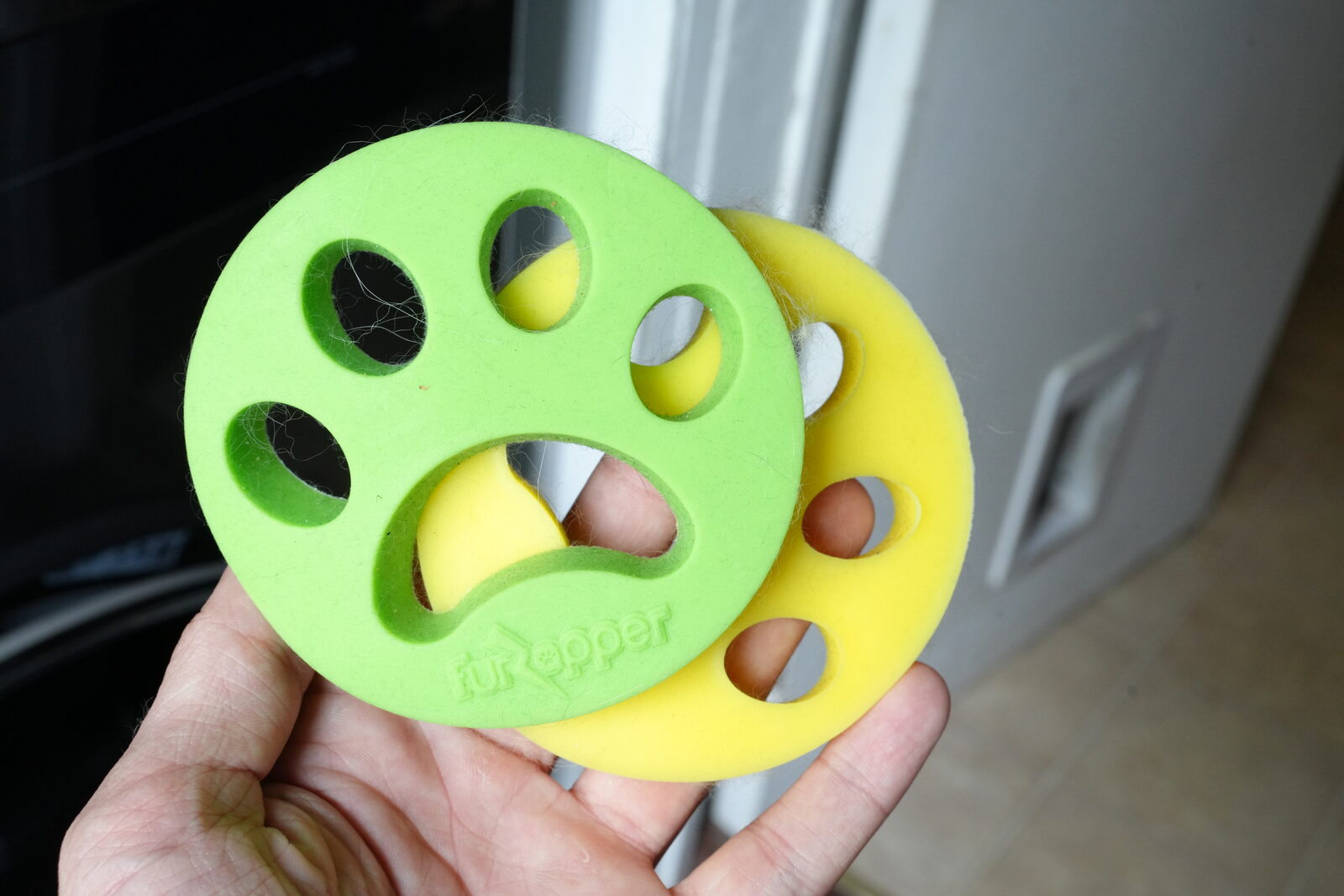
FurZapper disc, one per pet. The lint trap fills measurably more. That's the whole game.
The best way to get cat hair out of laundry is to drop one FurZapper silicone disc per pet in the drum and leave it in through the dryer cycle, so the hair grabs the disc and ends up in the lint trap instead of redistributed across the load. Clean the lint trap before every cycle.
FurZapper disc, one per pet. Clean the lint trap before every load. That's the whole game. After a year of daily laundry runs in my 3-cat house I've stopped trying anything else, the lint trap fills measurably more after a cycle that included the discs and that's all I care about.
This page is part of the surface-by-surface remove cat hair guide, broken out for the people who searched the washing machine question specifically. Three steps below, plus the prevention upstream, plus the stuff to skip.
Step 1
One FurZapper per pet, in every load
Grab a FurZapper. Toss one disc per pet into the drum with the rest of the load. With my 3 cats that's 3 discs every time. Wash on whatever cycle the fabric calls for, transfer the load to the dryer with the discs still in, run the dryer normally. Don't fish the discs out between machines, that's the whole point.
The mechanism is dumb-simple and that's why it works. The agitator alone has nowhere to send loose hair, so water and detergent lift it off the fabric and then it just gets churned around and lands on the next item in the load. The silicone disc gives that loose hair a tacky surface to grab. Once it's stuck to the disc, it's not going back onto your sweater.
One disc per pet is the manufacturer's recommendation and it checks out. A 2-pack in a heavy comforter run with 3 cats' worth of hair gets overwhelmed fast. The math is linear, 2 cats want a 2-pack, 3 cats want a 4-pack. Discs are about $14 for a 2-pack and they last for years, mine are over a year old and pulling hair the same way they did on day one. Read the full FurZapper review for the year-long take.
Don't overload the washer. The drum needs room to tumble for the disc to circulate. A drum stuffed to the gasket just pins the disc to one side and nothing moves.
Step 2
Clean the lint trap every cycle
Pull the lint trap, clear it, before every dryer load. This is the most-skipped step in cat-hair laundry and it's the one that decides whether the FurZapper works or not. A clogged trap blocks airflow and dramatically cuts how much hair the dryer can pull out of the clothes. The hair has to go somewhere. If the screen is full, it stays on your shirt.
It takes 10 seconds. Slide the screen out, peel the layer off, drop it in the trash, slide it back in. I keep a small trash can next to the dryer specifically for this. After a heavy-shed cycle the layer comes off in one pelt-shaped sheet and you can feel how much hair was actually flowing through the machine.
Once a month, pull the trap all the way out and rinse it under the tap with dish soap. Dryer sheet residue builds up on the mesh and it cuts airflow even when the trap looks clean. A 30-second rinse fixes it.
Step 3
Run a second dryer cycle if the load is heavily covered
For loads that went in covered in hair, the comforter the cat sleeps on, the throw blanket that lives on the couch, one cycle won't get all of it. Pull the lint trap, clear it, and run another 30 to 40 minutes on low heat or air-only. The second pass with a clean trap pulls another visible layer of hair into the screen.
I do this maybe once a week with the cat-blanket and the duvet cover. Not every load, just the bad ones. Two cycles plus a clean trap between is the difference between a comforter that comes out fresh and a comforter that comes out 80% there.
If the dryer has an air-fluff or no-heat setting, that's the right one for the second cycle. Tumbling without heat is enough to keep pushing hair off the fabric and into the trap, and you don't risk overdrying anything that already finished.
The marginal helper
Why dryer sheets only help a little
Dryer sheets reduce static, and less static means hair releases off fabric a little easier into the lint trap. That's it. They are not a cat-hair tool, they are a static tool that has a small downstream effect on hair.
I tried Bounce Pet Hair Mega Sheets for a couple of months. The pitch is 3x pet-hair-fighting ingredients. Honestly I can't tell they do more than regular dryer sheets. Bounce mega sheets are fine if you'd buy dryer sheets anyway, but they're not better than regular dryer sheets specifically for cat hair. The disc is doing the work, the sheets are doing static.
Skip the dryer sheets entirely if you don't want them, the FurZapper plus a clean lint trap covers the cat-hair job on its own.
Want the next how-to update when I find something?
I'm working through every cat hair surface in the house. Couch, clothes, car, bedding, fan blades, laundry. One email when there's something worth sharing, that's it.
One-tap unsubscribe in every email. See the privacy policy.
Don't bother
What to skip
The internet is full of laundry tricks for cat hair that don't earn the time. The three I've tested and won't do again:
A vinegar wash. The pitch is that white vinegar in the rinse cycle softens fabric and helps hair release. In practice it does almost nothing for cat hair and your laundry room smells like a salad for an hour. The disc does the same job without the smell. Save the vinegar for the descaling cycle.
Baking soda in the drum. Same pitch, different powder. A scoop of baking soda with the detergent is supposed to lift hair. It doesn't, and it leaves a faint chalky residue if you overdose. Cat hair is not a smell problem, it's a static and adhesion problem, and powder doesn't fix either.
Lint balls or generic "pet hair laundry balls." The Amazon dupes that look like spiky rubber dryer balls with the FurZapper-style pitch. Tried two different brands. They tumble, they don't grab hair. The FurZapper is paw-shaped flat silicone for a reason, surface area and tackiness are the variables, not spikes. The dupes don't work the same way.
And don't run the agitator without something tacky in there. A wash cycle on a hairy load with no FurZapper just moves the hair around the load. The reason the disc exists is that the agitator alone has nowhere to send the hair.
Upstream fix
Brushing the cat cuts the hair at the source
The fastest way to get less cat hair in the laundry is to take less of it off the cat in the first place. A 5-minute pass with the EquiGroomer pulls out a visible chunk of loose undercoat that would otherwise end up on a shirt, then on the floor, then in the wash. I do it once a week with each of my 3 cats, twice a week in spring and fall.
Take the cat outside on a leash or put them in a dry bathtub before the session. So much fur comes off you don't want it landing on the carpet. The hair you brush out is hair that doesn't land on a sweater, doesn't redistribute in the wash, doesn't end up in the lint trap.
Combine that with a FurZapper per pet downstream and the laundry side of the cat-hair problem more or less solves itself. Brush upstream, disc downstream, clean lint trap between.
The kit
Tools you actually need
The whole laundry kit is one item plus the dryer you already own.
| Tool | Use it for | Cost |
|---|---|---|
| FurZapper 4-pack | One disc per pet, every load | $25 |
| Lint trap (already in your dryer) | Cleared before every cycle | Free |
| EquiGroomer 5" | Brush the cat first, less hair into laundry | $25 |
Full reviews are on the main cat hair guide. If getting hair off clothes after the wash is the next problem, that's a lint roller job. For sheets and comforters, the fabric matters as much as the wash routine.
Frequently asked
FAQ
What's the best way to remove cat hair from clothes in the wash?
One FurZapper silicone disc per pet, in every load, leave them in through the dryer cycle. The disc gives loose hair a tacky surface to grab during the wash, then the dryer tumbling pushes that hair off the disc and into the lint trap. Clean the lint trap before every load. That's the whole method.
Why does cat hair stick to clothes in the washing machine?
The agitator alone has nowhere to send loose hair. Water and detergent loosen it off the fabric, but without something tacky in the drum to catch it, the hair just gets churned around and lands back on the next item in the load. That's why a sweater you washed alone comes out with hair from a t-shirt that was in the same cycle.
How many FurZappers do you need for a heavy cat-hair load?
One disc per pet. With my 3 cats that's 3 discs in every load. The manufacturer says the same and it checks out. Two discs in a heavy comforter run with 3 cats' worth of hair gets overwhelmed fast. A 4-pack covers a 3-cat or 4-cat house. A 2-pack is a starter kit.
Do dryer balls work as well as FurZapper for cat hair?
No. Wool dryer balls help with drying time and softness, they don't have the tacky silicone surface that grabs hair. They get covered in hair, but they don't pull hair off other items the way the FurZapper does in the wash. Different tools for different jobs. If you want softer towels, dryer balls. If you want less cat hair, FurZapper.
Can cat hair clog a washing machine drain?
Over time, yes. Loose hair that doesn't stick to a disc or a fabric ends up in the drain pump filter, and once a year or so a heavy-shed house wants to pull that filter out and clear it. Front loaders have a small filter door at the bottom, top loaders catch hair in a lint screen on the agitator. A FurZapper cuts how much hair makes it that far.
Is it safe to wash heavily fur-covered clothes in a regular washer?
Yes, but shake the worst of the hair off first. A 30-second shake outside or over a trash can dumps the surface layer that the washer would just redistribute. Then run the load with a FurZapper per pet and a normal detergent dose. Don't overload, the drum needs room to tumble for the disc to do its job.
Should you wash cat hair clothes hot or cold?
Cold is fine, hot is fine, the temperature isn't the variable that matters. The variables are the disc, the lint trap, and the second cycle. Wash on whatever setting the fabric calls for and let the FurZapper plus the dryer do the cat-hair work.
Will running the dryer twice help remove more cat hair?
Yes, on heavy loads. A second 30 to 40 minute cycle on low heat or air-only, with the lint trap cleared between, pulls another visible layer of hair into the screen. The first cycle gets the bulk, the second cycle finishes the embedded stuff. For a normal load one cycle is enough.
How do you clean cat hair out of a washing machine drum?
Wipe the inside of the drum and the rubber gasket with a damp microfiber cloth between heavy loads. Hair gets stuck under the gasket lip on front loaders. Once a month run an empty hot cycle on the cleaning setting if your machine has one, that flushes residue and any hair clinging to the drum walls.
How I tested
The methodology
3 cats, 2 longhairs, daily heavy loads
Leo, Luna, and Herbie. Two are outdoor rescues and two are longhairs, so the laundry hair load runs heavy. Daily wash loads, multiple cat-blankets and a comforter in rotation. The dryer's lint trap is the test bench.
FurZapper 2-pack vs 4-pack vs no disc vs sheets-only
Ran every combination over a year. No disc and a hairy load redistributes hair across the rest of the load. A 2-pack with 3 cats gets overwhelmed on heavy loads. Dryer sheets alone do almost nothing for hair, they help static. The 4-pack with the lint trap cleared every cycle wins.
Decision: 3 discs, lint trap every load
One disc per cat in every load, lint trap cleared before every dryer cycle, second dryer cycle on heavy loads. That's the routine. No vinegar, no baking soda, no spiky lint balls.
More how-tos
The rest of the house
Laundry is one surface. The full guide covers all of them: how to remove cat hair from everything. After the clothes come out of the dryer, an Evercare lint roller handles the bits the FurZapper missed, that's the how to remove cat hair from clothes page. For sheets, comforters, and pillowcases, the fabric is doing as much work as the wash routine.
And if the couch is the next surface staring at you, that's a ChomChom job, not a lint-roller job. Different tool for a different surface.