Cat Home Gear That Earned Its Spot
The non-hair gear in a three-cat house. Litter Robot 4, Litter Hopper, and the Petkit FreshElement Solo feeder. What I'd buy again, what I'd change, and the deals worth waiting for.
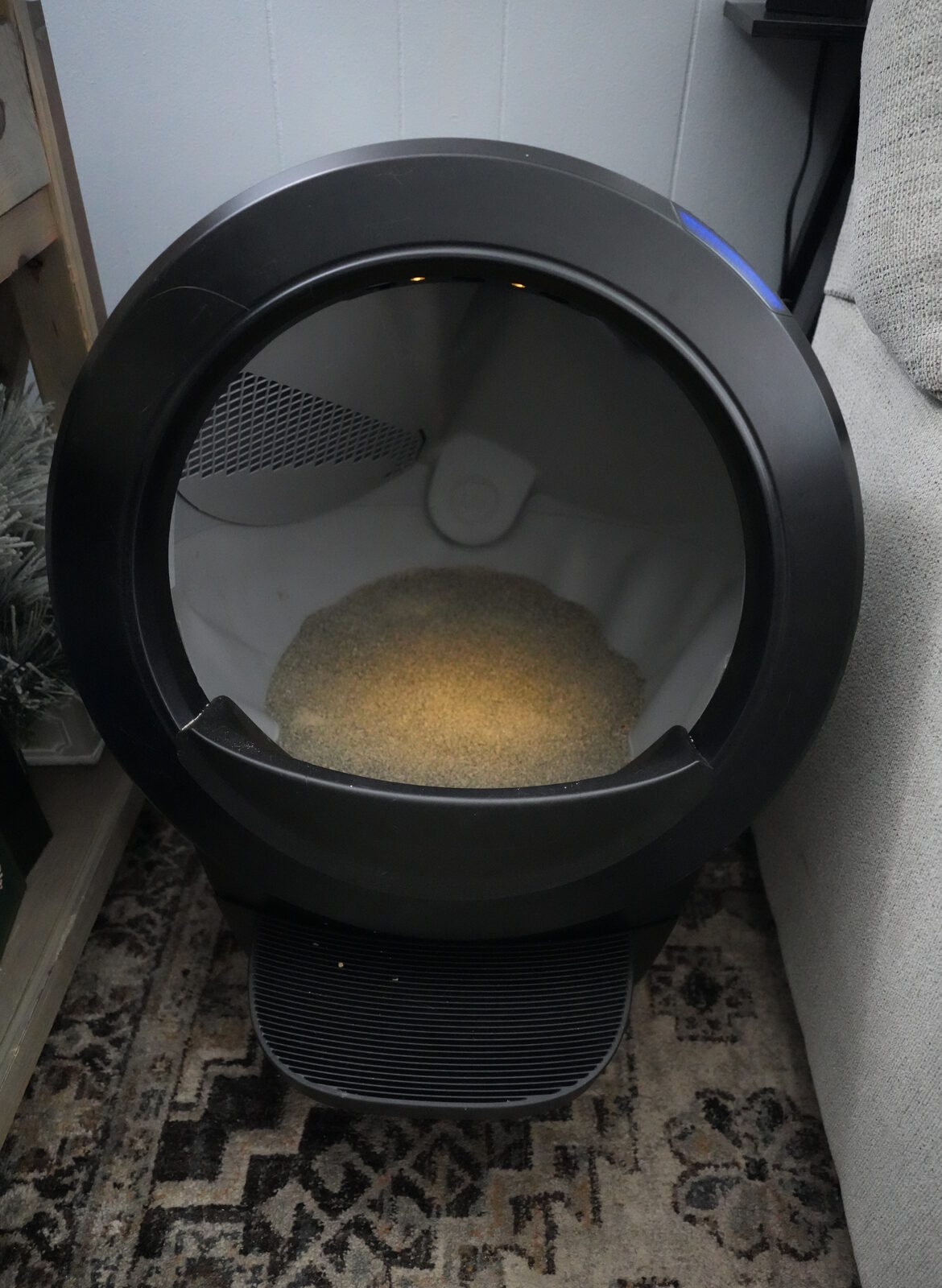
The rest of the cat house. Litter, food, the gear that isn't about hair but earns its spot in a three-cat home anyway. Two of my three cats are rescues who came in from outside and had never been inside a house before adoption, which matters for the Litter Robot section because it's the most surprising thing about the product and nobody talks about it.
If you're here for the hair side of things, the main cat hair guide covers the laundry, furniture, floor, and grooming products that earned a place. The air and fans guide covers the airborne side, including how the Shark HP200 ramps up after the Litter Robot cycles to catch litter dust.
Litter • The big-ticket pick
Litter Robot 4
The Litter Robot 4 is a self-cleaning, self-rotating litter box. Cat goes in, cat leaves, the globe rotates, waste sifts into a sealed drawer at the bottom, fresh litter ends up back at the top. Up to four cats per Whisker's guidance. About 7 to 8 days between waste-drawer empties for a single cat. With three cats, mine fills in about 2 to 3 days, which is still better than scooping twice a day.
The thing nobody mentions in reviews: rescue cats figure it out instantly. Two of my three cats came from outside, had never been inside a house, had never seen a litter box, let alone a rotating one. They walked up, jumped in, used it on the first try. They've never had an accident since. The chamber is the right size, the entry height is reasonable, and they apparently treat it as a "place to go" without overthinking the fact that it occasionally spins.
Get the 4, not the 5
I bought the 4 specifically because the 5 added a feature I didn't want. The Litter Robot 5 has WasteID, which is a sensor system that distinguishes urine from solid waste and adjusts cycle timing accordingly. Whisker pitches this as a health-monitoring feature. In practice it means your litter box is now uploading data to an app and pinging you about your cat's bathroom habits. If you have a cat with kidney issues and your vet wants the data, fine. For a healthy three-cat household, it's a $100 upgrade to get notifications I have no use for.
The 4 is the dumber appliance. It rotates after a cat uses it. It seals the waste. The app exists if you want a use log, but you can ignore it forever and the box will keep working. That's exactly what I wanted from a $700 piece of equipment that lives in my house: do the job, don't talk to me.
| Feature | Litter Robot 4 | Litter Robot 5 |
|---|---|---|
| Retail price | $699 | $799 |
| Max cats | 4 | 5 |
| Cat weight range | 3 to 25 lb | 3 to 30 lb |
| Waste drawer capacity | ~7 to 8 days (1 cat) | ~10 days (1 cat) |
| App notifications about cat poop | No | Yes (WasteID) |
| Carpet tray | Sold separately | Built-in |
For most households, none of those differences are worth $100. If your cat has a known health issue and your vet asked for the data, the 5 makes sense. Otherwise the 4 cleans the box just as well, costs less, and watches for sales. The 4 hits ~$499 on Whisker's site and at Costco a few times a year.
What it's like to live with
- Quiet enough to share a room with. Cycles run for about three minutes with a steady mechanical hum. Not silent, not disruptive.
- Cats keep using it through cycles. The unit waits for the cat to leave before rotating. Nobody gets stuck.
- Standard 13-gallon kitchen bags fit the waste drawer. No proprietary refills.
- You still deep-clean the litter bed every few weeks. The unit handles the daily waste; emptying the whole globe and refilling with fresh litter is still on you, every 4 to 8 weeks.
- It smells less than a regular box. Solids get isolated within minutes and sealed in the drawer. With three cats, the room is dramatically cleaner-smelling than it was with a manual pan.
The honest gripes
- The price. Even on sale it's $400 and up. If two manual boxes scooped twice a day is working for you, this isn't a need.
- Litter scatter is the same as any other box. The Litter Robot doesn't reduce tracking. A carpet tray (paid accessory on the 4) helps.
- Setup takes 30 minutes. The bonnet is fiddly the first time you put it on.
- Litter cost goes up because the globe holds more litter than a pan. Plan on about 10 lb of clumping litter at first fill.
Where to find deals
Whisker runs sales on their own site multiple times a year: Black Friday, Cyber Monday, spring promos. Costco carries the 4 with bundled accessories a few times a year at a real discount. eBay has a steady stream of lightly-used returns. The official refurb program (when it has stock) is the safest discount path: same warranty, about $150 off retail.
Litter • Nice upgrade, with a catch
Litter Hopper (Litter Robot 4 add-on)
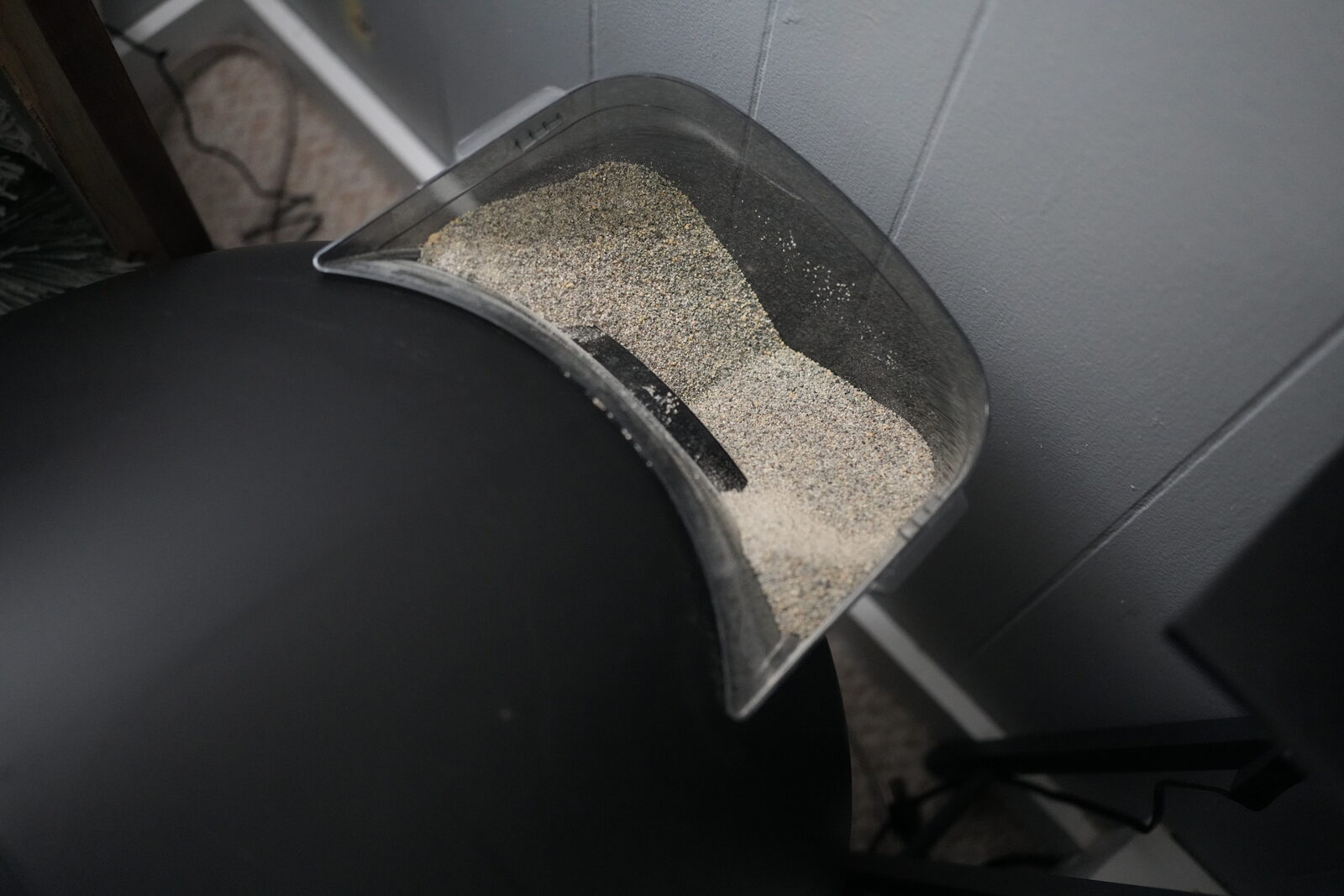
The Litter Hopper is a Litter Robot 4 add-on that automates the one task the Litter Robot doesn't already do: refilling the litter bed. It holds about 13 cups of fresh litter and dispenses roughly half a cup at a time, automatically, when the unit's sensors detect low litter. Whisker says one fill should last 15 to 17 days for a single-cat home. In my three-cat home it lasts about 5 days.
What it does well:
- Eliminates manual top-offs entirely. The litter bed stays at the optimal level all the time.
- The dispense is gentle. No dust storm, no clumps, no jamming on standard clumping litters.
- Setup is plug-and-play. Sits on top of the Litter Robot and connects via the existing port.
- Looks clean and fits the same footprint as the unit. No "ugly" factor.
What I'd change. The 13-cup capacity isn't enough for a multi-cat home. For three cats, the Hopper itself becomes the new manual-refill task. I'm replacing my "refill the Litter Robot" chore with "refill the Litter Hopper": every 5 days instead of every 2 to 3, but it's not the hands-off product the marketing suggests for households with multiple cats.
I would happily trade the sleek look for a bulk-storage version. Picture a Hopper that holds an entire 20-pound bag of litter, even if it's twice as tall and looks like a pet-store dispenser. For multi-cat households, that's the actual product.
Should you buy it? With one cat, yes. The 15-plus day refill cycle delivers what the product promises. With two cats, maybe; you're at about 7-day refills, still better than manual. With three or more, the Hopper helps but doesn't fully eliminate the chore. Wait for the bulk version (which Whisker hasn't announced) or skip it.
Feeder • Multiple beats one big one
Petkit FreshElement Solo Smart Feeder
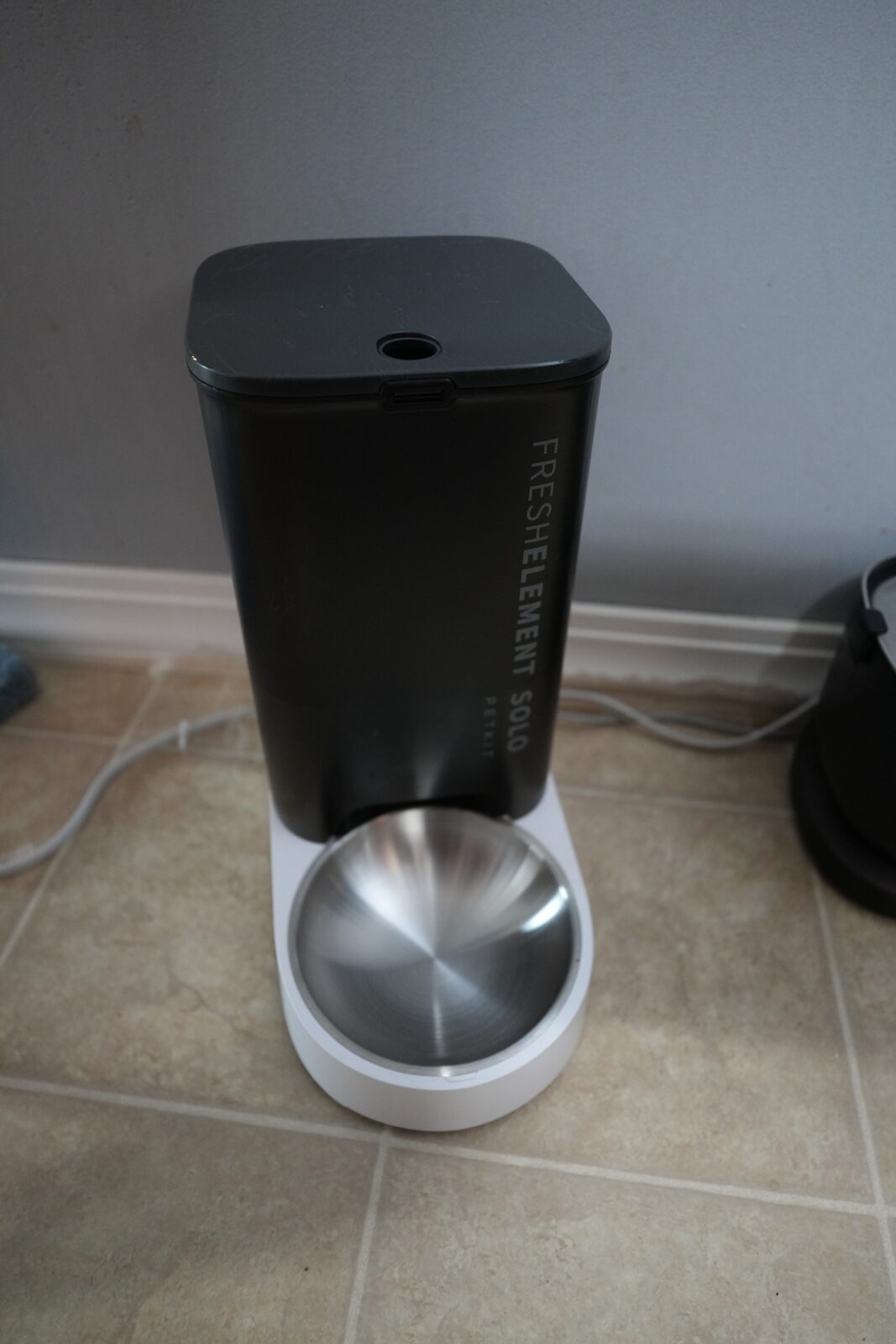
The Petkit FreshElement Solo is a single-bowl smart feeder. It holds 3L (about 12 cups, around 2.9 pounds) of dry food, schedules up to 10 meals per day, runs on plug power with five AAA batteries as backup for outages, and connects via 2.4GHz WiFi to the Petkit app. The bowl is removable stainless steel and dishwasher-safe, which matters more than it sounds like it should.
Multiple Solos beat one multi-bowl feeder
If I were starting over with multiple cats, I'd skip multi-bowl feeders entirely. Buy two or three Solos.
Two-bowl feeders force both cats to eat at the same physical station. That doesn't work for shy cats, it creates resource-guarding tension in dominant-cat households, and it locks you into one configuration forever. With multiple Solos, the kitchen station feeds the cat that hangs out in the kitchen, the bedroom station feeds the cat that won't come downstairs at dinner, and you can add a fourth unit if you adopt a fourth cat or move one into the closet if you don't.
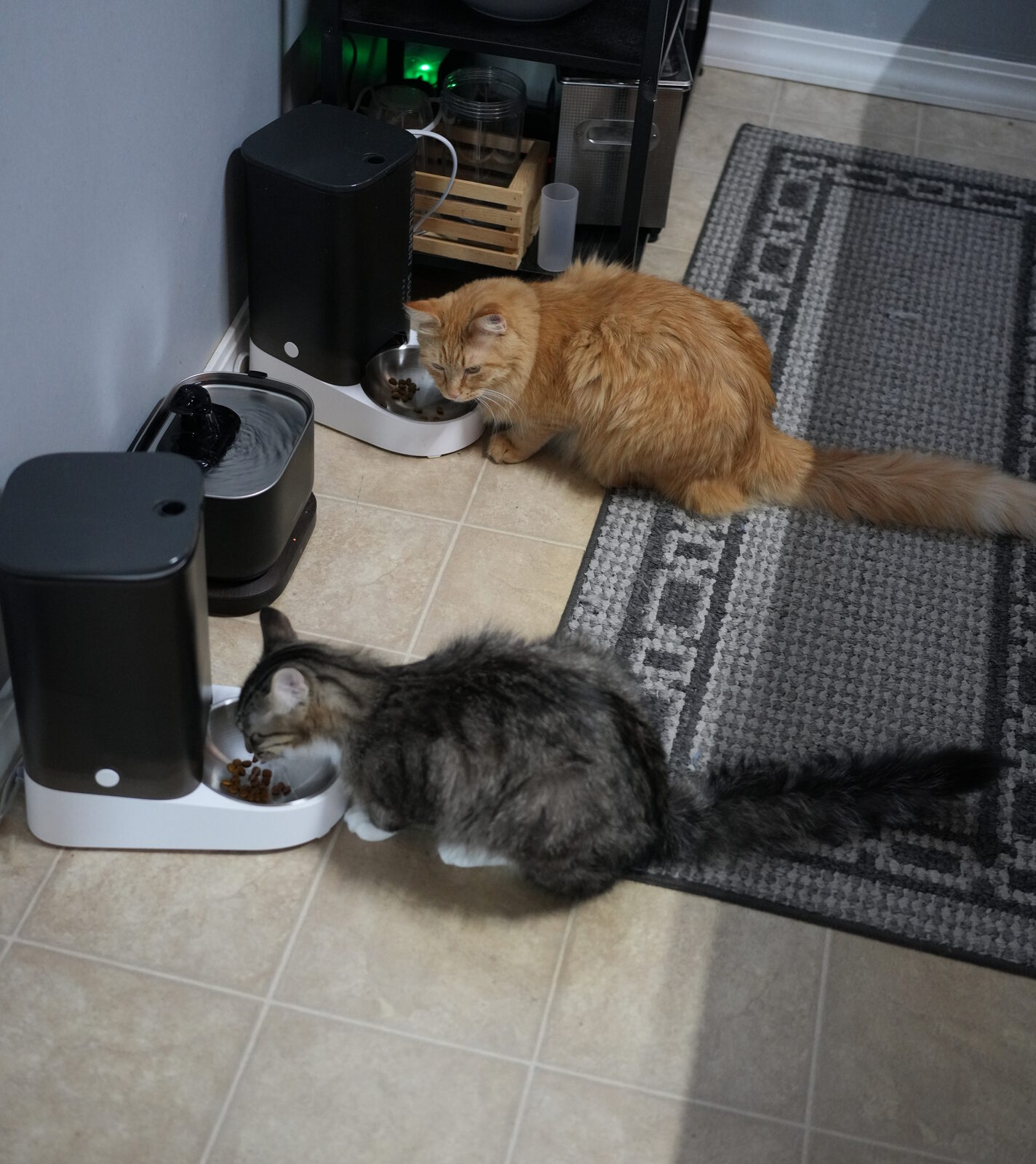
The other reason to go single-bowl is the bowl itself. The Solo's bowl is removable stainless steel, dishwasher-safe, and small enough to carry. Luna, the shyest of my three, won't always come to a feeding station. I lift the bowl off the Solo and put it directly in front of wherever she's hiding that day. She eats. A two-bowl feeder doesn't let you do this; the bowls live where the unit lives.
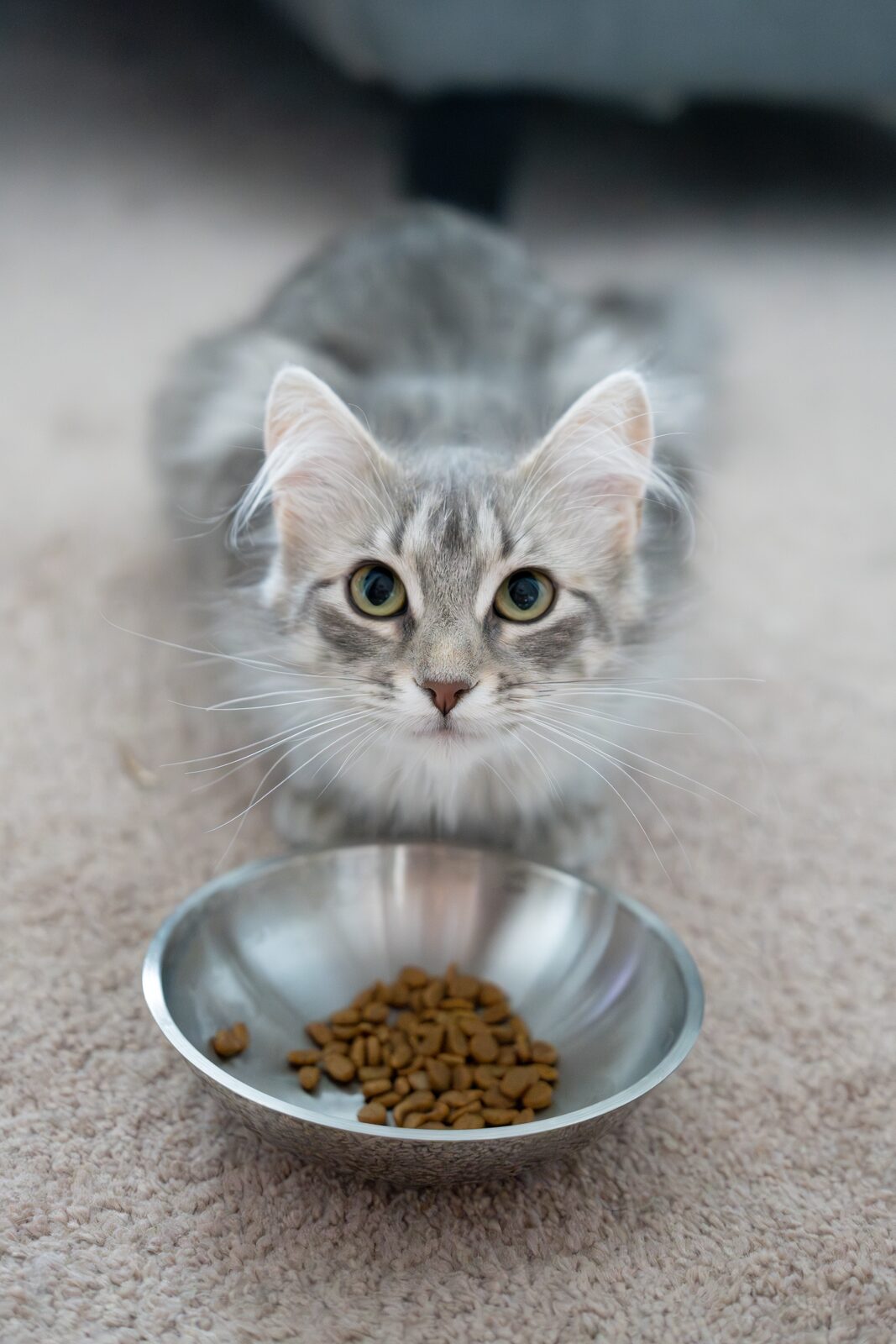
The cost difference isn't dramatic. Each Solo is about $80 to $100. A multi-bowl PetKit unit runs around $120. For an extra $40 to $80 over the long run you get the flexibility, and you don't have to make every cat agree to eat at the same address.
What it does well
- Removable, dishwasher-safe stainless bowl. The single most-used feature.
- Triple Fresh-Lock seals. Food stays fresh for the full 3L hopper without going stale.
- App scheduling and food-shortage alerts. The app tells you before the hopper runs empty.
- Battery backup is optional. The unit accepts five AAAs as a backup, but I've never bothered. Mine has been on plug power for years and has never missed a meal. Ours doesn't lose power often, so the AAAs feel like belt-and-suspenders. If you live somewhere with frequent outages, drop them in.
- Reliable dispense. Mine has dispensed thousands of meals across years without a jam.
What's worth knowing before you buy
- 2.4GHz WiFi only. If your router only broadcasts 5GHz, you'll need to enable a 2.4GHz network. Most dual-band routers handle this in their admin settings.
- You probably don't need the AAAs. The Petkit ships with a battery slot for outage backup. Mine has run on plug power alone for years without an issue. Skip the batteries unless your power is unreliable.
- The hopper is sized for kibble. Larger pieces or freeze-dried mixers can occasionally bridge near the dispense. Most standard kibble is fine.
- The original Solo is being phased out in favor of newer Petkit feeders (Solo SE, Mini, etc.). Functionality is the same; specs vary slightly.
The kibble dust and dander that drift around feeding stations is part of why I run an air purifier in the kitchen. The Shark HP200 review covers what HEPA does about all the small stuff cats kick into the air.
Frequently asked
FAQ
Is the Litter Robot 4 worth it over the Litter Robot 5?
Yes for most households. The 4 ($699) is a self-cleaning litter box. The 5 ($799) adds WasteID, a sensor system that pings your phone with information about your cat's bathroom habits. Useful if your vet asked for the data; not useful otherwise. For a healthy multi-cat home, the 4 cleans the box just as well, costs $100 less at retail, and goes on sale to under $500.
Will rescue cats use a Litter Robot?
In my house, yes. Two of my cats are outdoor rescues who had never been inside a house before adoption. All three cats walked up, jumped in, used it on the first try, and have not had an accident since. The chamber's size and step-in height seem to matter more than prior bathroom habits.
How long does the Litter Hopper last?
The Litter Hopper holds 13 cups and dispenses about half a cup at a time, for ~25 dispenses. With one cat that's roughly 15 to 17 days between refills. With three cats it runs out in about 5 days, noticeably faster than the marketing implies. A bulk-storage version would solve this; one doesn't yet exist from Whisker.
Should I get one big multi-bowl feeder or multiple single feeders?
Multiple single feeders. A two-bowl feeder forces both cats to eat at the same station, which doesn't work for shy cats and creates resource-guarding stress in multi-cat homes. Multiple single units (like the Petkit FreshElement Solo) let you spread feeding stations around the house, schedule each cat independently, and pull the bowl out for skittish cats. The slight extra cost is worth it.
Does the Petkit Solo work with 5GHz WiFi?
No. The FreshElement Solo only supports 2.4GHz networks. If your router only broadcasts 5GHz, you'll need to enable a 2.4GHz network. Most dual-band routers handle this in their admin settings.
Can the Petkit Solo run during power outages?
Yes. The unit takes five AAA batteries as backup. With batteries installed, scheduled feeds continue through power outages. Plan to replace the AAAs every 2 to 3 months because the unit cycles to verify them even when plugged in.