How to Remove Cat Hair From Bedding
Dryer trick before the wash, a $14 FurZapper in with the load, and the fact that fabric is the upstream fix nobody admits.

Best way to get cat hair off sheets and a comforter: 10 minutes in the dryer on no heat before you wash, then wash with a FurZapper, then dry with the FurZapper still in. Most of the hair ends up in the lint trap, not back on your bed.
That's the routine. The bigger thing nobody tells you, the fabric is the problem. If your sheets are cotton-poly or brushed microfiber, no cleaning routine short of replacing them keeps them hair-free for long. This page is part of the surface-by-surface remove cat hair guide, broken out for the people who searched the bedding question specifically. Three steps below, plus the upstream fabric fix, plus the stuff to skip.
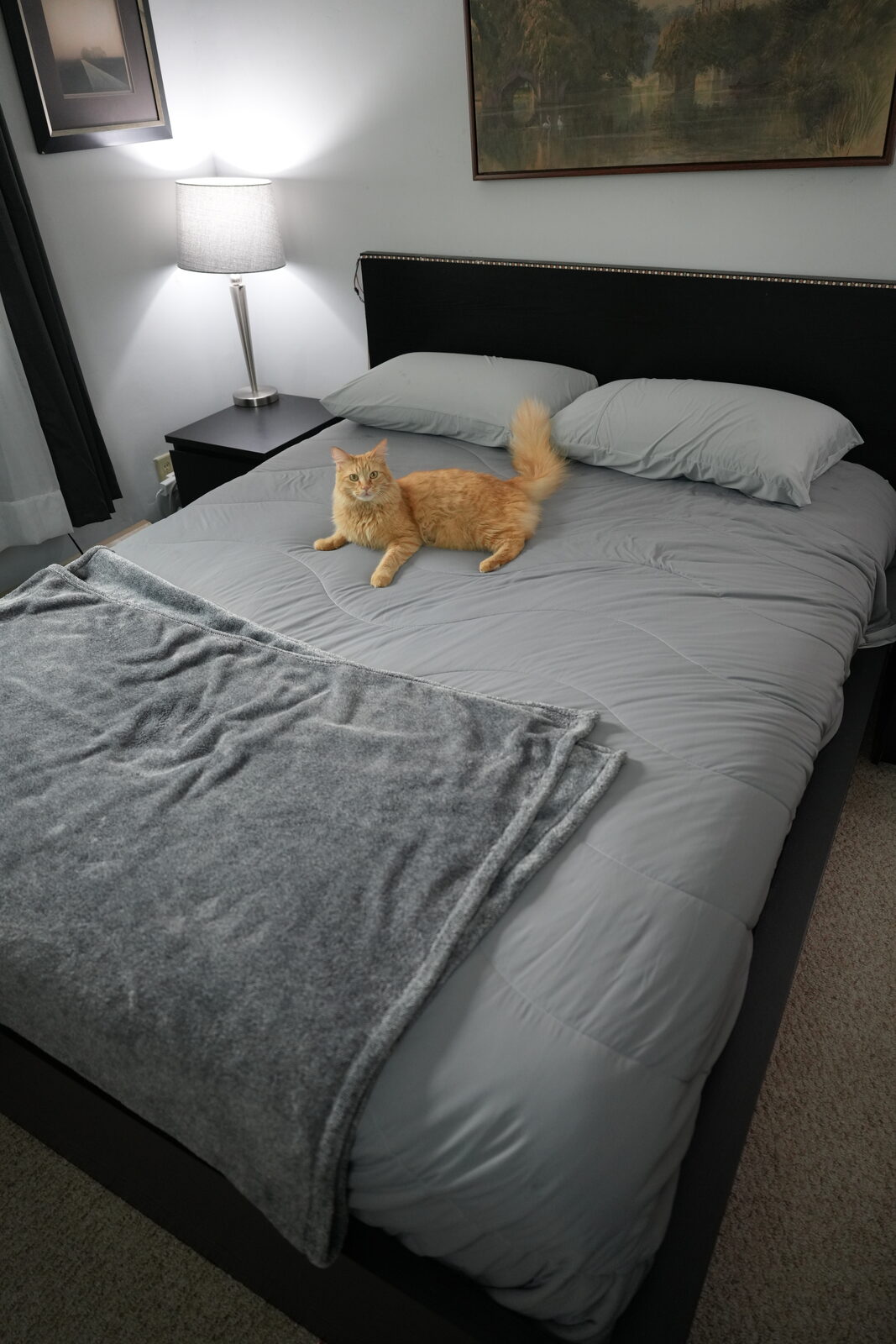
Step 1
Dryer trick before you wash
Toss the bedding in the dryer for 10 minutes on low or no heat before the wash cycle. Tumbling and static drag the loose hair into the lint trap, and the sheets come out visibly cleaner before any water has touched them. Pull the trap after, you'll see a brick of hair the wash would have spread across the load.
This is the trick almost nobody runs because it sounds backwards. You're drying a clean sheet that you're about to wash. It works because cat hair is hydrophobic, water doesn't move it the way air does. Once the sheet is wet, the hair clumps and bonds to the fabric, and now you're trying to peel it off a wet rope. Get the loose stuff out dry, then wash.
Works on comforters and duvet covers the same way. King-size comforter, 10 minutes on no heat, lint trap full. For a heavy-shed comforter run it twice and clean the trap in between.
Step 2
FurZapper in the wash and the dryer
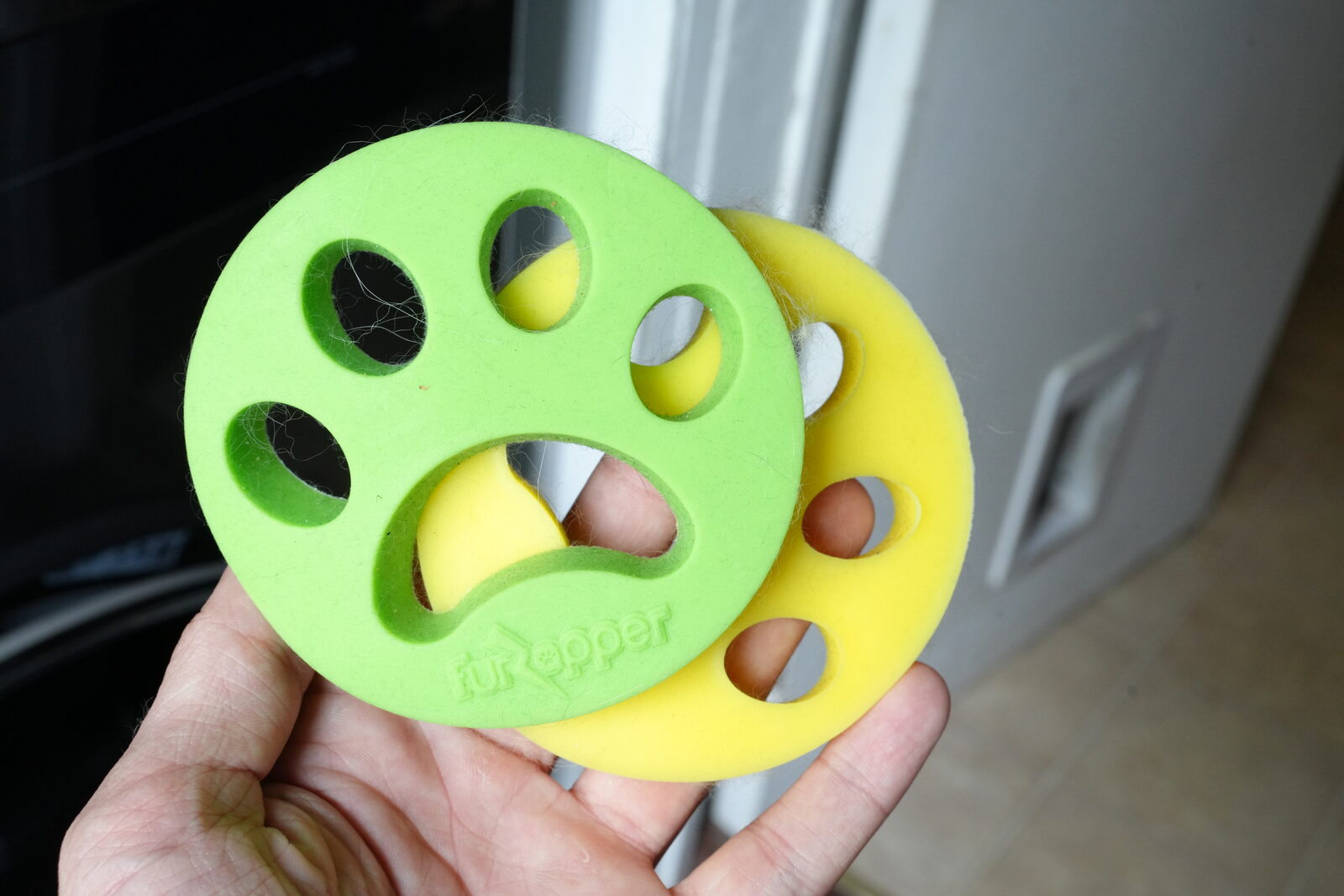
Drop a FurZapper silicone disc in with the load. Wash, then leave it in for the dryer cycle. The tacky silicone gives loose hair a place to go that isn't the rest of your sheets. About $14 for a two-pack on Amazon and they last forever, mine are over a year old and still tacky.
One disc per pet. With my 3 cats that's 3 discs. The manufacturer says the same thing and after running it both ways I agree, a single FurZapper in a heavy-shed bedding load gets overwhelmed and you end up with the same redistributed hair you started with.
Run the cycle twice if the bedding is bad. The first wash pulls the loose layer, the second wash gets the embedded stuff that loosened up in the first cycle. I do this with the comforter once a month after the cats have been on it nightly.
Step 3
For pillowcases, double down
Pillowcases are the worst part of the bed for cat hair and it's not close. They touch your face every night, the fabric is usually brushed, and they show every hair the second you put your head down. Herbie sheds onto the pillows the most because he sleeps next to my head, the orange undercoat shows up against any color.
Run pillowcases through twice. Dryer trick, wash with a FurZapper, dryer with the disc still in. If the case looks suspect after, do it again. They're small, the second cycle is cheap.
One thing to know about brushed microfiber pillowcases. They keep coughing up hair for several wash cycles after you stop using them, that's how deep cat hair embeds in the napped surface. I had a set that produced visible orange hair through 4 washes after Herbie hadn't slept on them in two months. The fabric is the problem.
The upstream fix
Why the fabric is actually the problem
If your sheets are a cotton-poly blend or brushed microfiber, the cleaning routine above is a holding pattern. The fabric will keep grabbing hair every night the cat sleeps on it. Smooth, tightly woven fabrics like nylon, bamboo sateen, and percale let hair brush off instead of embed. Different fabric, different fight.
The full breakdown lives at the cat hair bedding guide, with macro photos of cotton vs slick weaves so you can see why one grabs hair and the other doesn't. Short version, swap your pillowcases first if budget is tight. They touch your face, they show hair instantly, they're the cheapest part of the bed to replace.
I switched to REST Evercool sheets after a year of fighting cotton-poly. Hair brushes off the polyamide blend with my hand, no roller, no FurZapper, no second wash cycle. The REST Evercool comforter behaves the same way. Spendy compared to a Target sheet set, but the cleaning time saved across a year is real.
Want the next how-to update when I find something?
I'm working through every cat hair surface in the house. Sheets, couches, fan blades, car seats. One email when there's something worth sharing, that's it.
One-tap unsubscribe in every email. See the privacy policy.
Don't bother
What to skip
The internet is full of cat-hair-on-bedding tricks that don't earn the time. The three I've tested and won't do again:
Vinegar in the wash. The pitch is that a cup of white vinegar softens fabric and helps hair release. In a 3-cat house I tried this with a heavy-shed sheet load and the hair distribution looked identical to a vinegar-free wash. The FurZapper does what vinegar is supposed to do, plus actually works. Save the vinegar for descaling the kettle.
Wool dryer balls alone. Dryer balls reduce static a little and shorten dry times, fine. They don't pull cat hair out of bedding the way the lint trap does. The dryer trick works because of the trap and the tumbling, not because of the balls. Add them if you want, but they aren't doing the job.
Hand-picking hair off a comforter. Yes, people do this. On a king-size comforter you'll be there for an hour and miss half. The 10-minute dryer cycle does it for you with no hands.
Lint roller on a king-size sheet. A 60-sheet Evercare roll covers maybe 60 square feet of cushion. A king sheet flat is closer to 80. You'll burn the roll and still have hair on the bottom corner. Lint rollers are right for clothes, the Evercare is what I keep by the door for that.
Edge case
Blankets and throws that aren't dryer-safe
Wool throws, weighted blankets, anything with electronics or stuffing that can't take a tumble. The dryer trick is out. A ChomChom Roller works on the flat surface the same way it does on a couch. Roll back and forth, the static lifts the hair, snaps into the chamber, dump it. About 30 seconds for a throw.
For chunky knit and weighted blankets, ChomChom only. Vacuuming a chunky blanket in place tangles the loops. Lint rolling them eats sheets and barely lifts anything from between the cables.
The kit
Tools you actually need
The whole bedding kit lands at about $14 plus the laundry machines you already own. The bedding upgrade is a separate budget question.
| Tool | Use it for | Cost |
|---|---|---|
| FurZapper, 2-pack | Wash and dryer cycle, one disc per pet | $14 |
| Dryer on low or no heat | 10 min pre-wash to drop hair into the lint trap | Already own it |
| ChomChom Roller | Wool throws and blankets that can't go in the dryer | $25 |
| REST Evercool sheets | Upstream fabric fix, hair brushes off the weave | $200 |
| REST Evercool comforter | Same fabric story for the duvet on top | $300 |
Full reviews are on the main cat hair guide. The fabric science with macro photos is over at the bedding guide.
Frequently asked
FAQ
How do you get cat hair off a comforter?
Tumble the comforter in the dryer for 10 minutes on no heat before you wash it. Most of the loose hair drops into the lint trap. Then wash with a FurZapper silicone disc and dry with the disc still in. Two cycles through if it's heavy.
Will FurZapper remove cat hair from sheets in the wash?
Yes, modestly. The silicone gives hair a tacky surface to grab so it doesn't redistribute across the rest of the load. One disc per pet. With 3 cats I run 3 discs, the manufacturer says the same and it checks out.
Why does cat hair stick to pillowcases more than sheets?
Pillowcases are usually brushed microfiber or cotton-poly, which have a napped surface that hooks individual hairs. They also touch your face, so the oil transfers and gives hair more to grab. Smooth tightly woven fabrics like sateen and percale don't have the same problem.
How do you remove cat hair from bedding without a lint roller?
Dryer trick. 10 minutes on low or no heat before the wash. Lint rollers are slow on a king-size sheet and you'll burn through a 60-sheet roll. The dryer drops most of the loose hair into the lint trap in one cycle. A FurZapper in the wash handles what's left.
Does the dryer trick work for cat hair on blankets?
Yes. 10 minutes on low or no heat before the wash works on blankets, throws, and comforters. Fleece and Sherpa hold hair worst, but the dryer still moves a lot of it into the lint trap. For chunky knit blankets, dryer first then a ChomChom Roller, vacuuming a chunky blanket just tangles the loops.
Can you remove embedded cat hair from microfiber sheets?
Partially. A FurZapper plus the dryer trick gets out the loose layer. The hair worked deep into the napped surface keeps coughing back up for several wash cycles after that. Brushed microfiber is the worst common bedding fabric for cat hair, and the only permanent fix is replacing it.
How often should you wash bedding when you have cats?
Sheets and pillowcases once a week minimum in a multi-cat house. Comforter and duvet cover every two weeks. If a cat sleeps on the bed every night, pillowcases are the one to swap mid-week, they touch your face and they show hair the fastest.
What's the best fabric to repel cat hair from bedding?
Smooth, tightly woven fabrics. Nylon, bamboo sateen, percale cotton, and the polyamide blend in the REST Evercool sheets all let hair brush off instead of embed. Avoid brushed microfiber, cotton-poly fleece, and any napped or fuzzy weave.
Does dryer sheet help remove cat hair from sheets?
A little. Dryer sheets cut static, which helps hair release into the lint trap instead of clinging to fabric. They don't replace the dryer trick or the FurZapper. Bounce Pet Hair sheets are fine but I can't tell they do more than the regular ones.
How I tested
The methodology
3 cats, 2 longhairs, hair on the bed daily
Leo, Luna, and Herbie all spend time on the bed. Two are outdoor rescues and two are longhairs, so the daily hair load on the sheets is heavier than a normal indoor cat house. The bed is the test bench.
Tested every approach over a year
Dryer trick, FurZapper one disc and three discs, vinegar wash, wool dryer balls, hand-picking, lint rolling a king sheet, just-replace-the-fabric. Documented what worked, what didn't, and what I won't do again.
Replaced the fabric last, on purpose
Cycled cotton-poly and brushed microfiber pillowcases through every cleaning method first, then swapped to the REST set after the cleaning routines hit a ceiling. The cleaning side of this page is from the year before that swap. The fabric side is what ended the problem.
More how-tos
The rest of the house
Bedding is one surface. The full guide covers all of them: how to remove cat hair from everything. The couch how-to is next-door if the sectional is also a problem. Clothes are a different fight, lint roller country.
For the fabric science with macro photos, the bedding guide covers cotton vs slick weaves at the fiber level. If you've decided the fabric is the fix, the REST Evercool sheets review is the year-long take.