FURminator vs EquiGroomer: I Tried Both
The deshedding tool everyone recommends, the one I keep reaching for, and the design difference that decides which one is right for your cat.
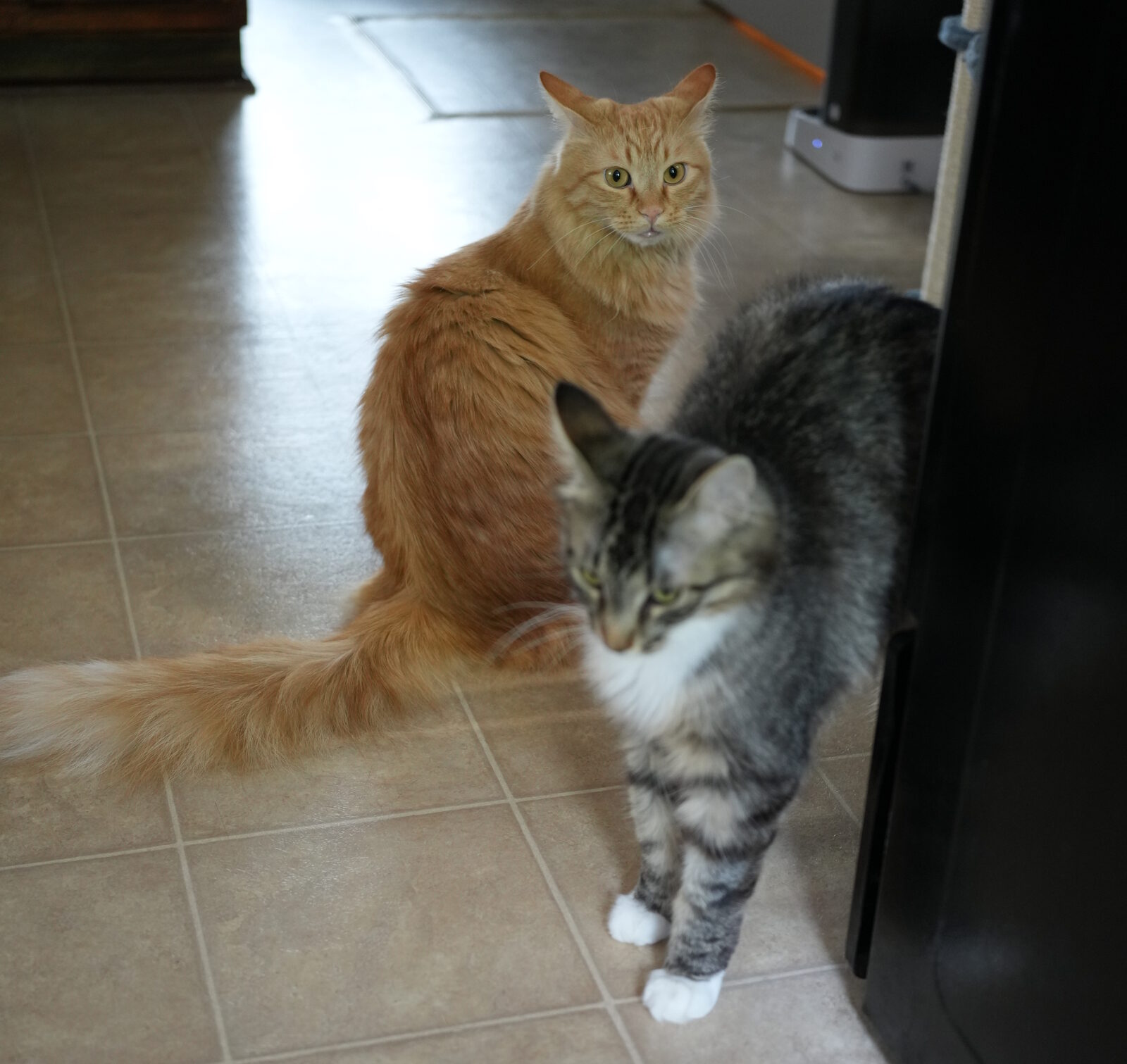
Brushing the cat is the most effective single thing you can do about cat hair. Five minutes every couple of days does more than any cleaning product after the fact. Most people who recommend a deshedding tool recommend the FURminator. After trying both, I switched to the EquiGroomer and never went back.
This is the comparison. What each tool does, which cats they suit, the things you only learn after weeks of use, and the verdict. For the rest of the cat hair stack (laundry, furniture, floors, air), the main cat hair guide covers the products that earned a spot.
The mechanical difference
Side-by-side: how they work
This is where the FURminator-versus-EquiGroomer debate gets clearer if you understand the design difference.
The FURminator uses a stainless steel blade that's a clipper edge in disguise. Fine, closely-spaced teeth that reach down through the topcoat to the undercoat. The blade is sharp. The teeth grab loose undercoat as you stroke and a button on the back ejects the collected hair so you don't have to clean it by hand. It works, but it requires care.
The EquiGroomer uses a serrated edge with short teeth curved outward, originally designed for horses. The teeth grab dead, scaly hairs by the ends rather than digging down. There is no sharp edge that can scratch skin. It pulls undercoat without cutting through the topcoat. It looks too simple to work (a serrated metal strip in a wood handle), but it does.
| Feature | FURminator | EquiGroomer |
|---|---|---|
| Blade type | Sharp stainless steel clipper edge | Serrated edge, short curved teeth |
| Hair-grab method | Reaches down to undercoat | Grabs hair by the ends |
| Risk if overused | Can scratch skin, thin topcoat | Minimal; no sharp edge |
| Ejector button | Yes | No (clean by hand) |
| Best for | Heavy shedders, careful owners | Most cats, most owners |
| Drag on the cat | Higher | Lower |
| Typical price | $25 to $35 | $20 to $30 |
The popular pick
FURminator deShedding Edge for Cats
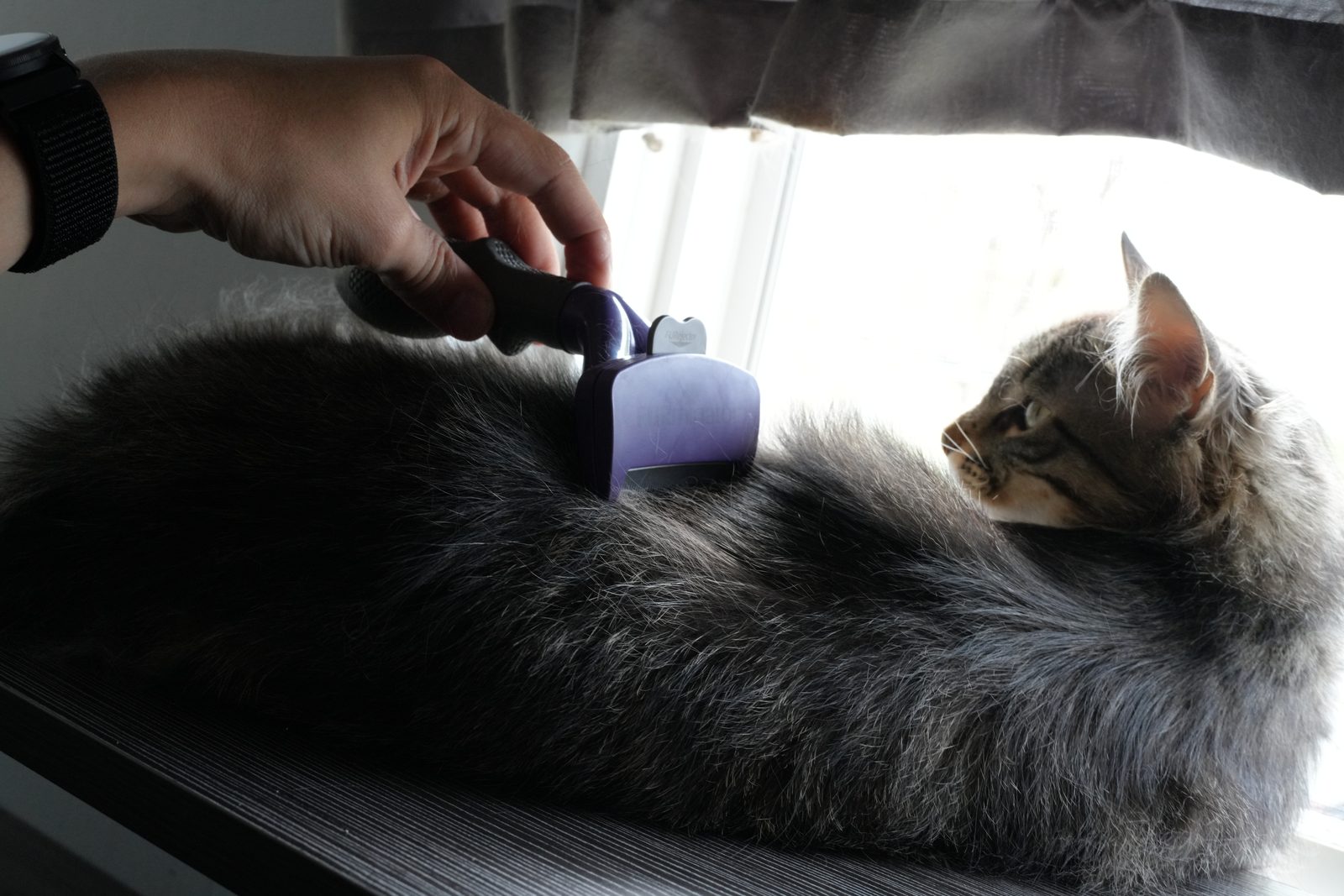
The FURminator was the first dedicated cat deshedding tool to go mainstream and the brand still dominates the category for a reason. It is well made. The stainless edge holds up, the handle is rubberized in the right places, and the ejector button on the back genuinely saves time. The marketing claim ("reduces shedding up to 90 percent") is overstated, but on a heavy-shedding cat in molting season, you can pull a startling amount of hair in a single session.
The reason it pulls so much per stroke is the same reason it tugs more. The teeth are clipper-fine and reach down through the coat to the undercoat, which means each stroke catches more hair, but it also means each stroke applies more lateral force. On a calm cat in molt, that's a feature. You see big chunks of undercoat lift in one motion. On a sensitive cat or a cat that's not in active shedding season, the same tug is what makes them walk away.
The other catch is technique-dependence. The blade is sharp by design. If you press too hard, you can scratch skin. If you use it too often, you can thin the topcoat. Vets and longtime owners have documented patchy hair and "burned" looking skin from overuse. Manufacturer guidance is light pressure, once or twice a week max, never on irritated skin or sensitive areas like the chin. Used as instructed, it's safe. The risk is it's easy to misuse without realizing.
On my three cats, the FURminator was the second-best tool. Leo (pictured above) tolerates it more than the other two. Herbie's coat is too long for the short-hair edition and too thin for the long-hair edition to be comfortable. Luna doesn't sit still long enough for me to be careful with it. So the EquiGroomer ends up being the everyday tool. But for a single cat in heavy molt, the FURminator earns its keep.
Pros
- Best build quality in the category; stainless edge, rubberized handle
- Ejector button makes cleanup actually fast
- Pulls bigger chunks per stroke during heavy shedding season
- Available in short-hair and long-hair editions
Cons
- Higher drag; sensitive cats are more likely to walk away
- Sharp clipper edge requires light pressure; easy to misuse
- Coat thinning and skin abrasions documented from overuse
My pick
EquiGroomer 5"
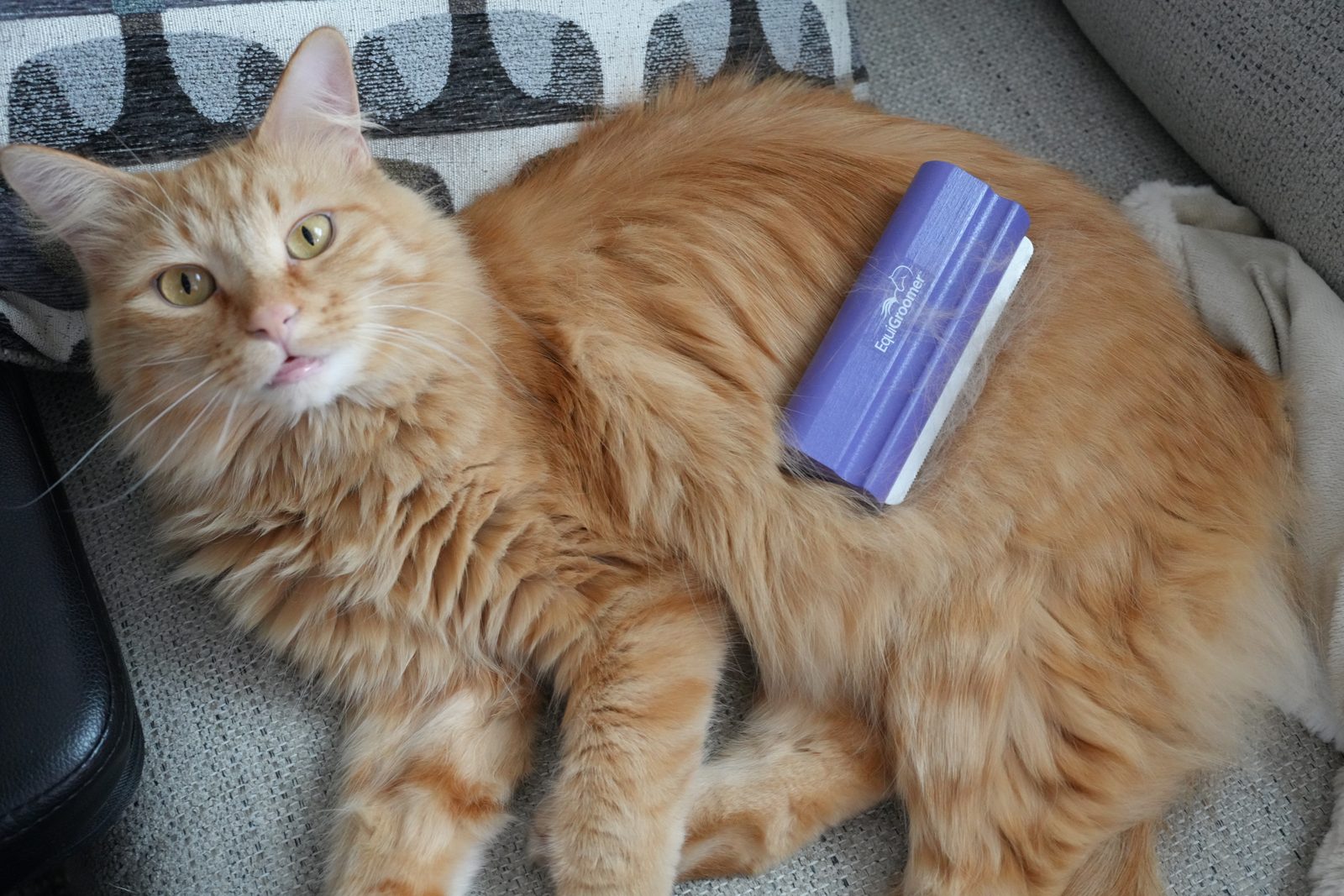
The EquiGroomer was originally a horse grooming tool. The cat and dog versions came later, but the design is the same: a serrated edge with short, outward-curving teeth set into a hardwood handle. There is no clipper blade. There is nothing sharp. The mechanism is purely the serration. Tiny barbs grabbing dead hair by the ends as you stroke.
Mechanically this is the right answer for cats. Cat undercoat sheds in dead hairs that have already loosened from the skin. You don't need to dig down to the skin to get them out. You need to grab the loose ones at their tips and pull. The 5-inch serrated edge is wider and longer than the FURminator's deshedding head, which means each stroke covers more coat and lifts more loose hair without pulling on the skin underneath.
The session habit is what makes it work day-to-day. I take the cat outside on a leash or set them in a dry bathtub before I start. The amount of fur this thing pulls in five minutes is genuinely impressive, and you do not want it falling into the carpet at your feet. Outside, the wind takes most of it. In the tub, you scoop it out at the end. Either way, the hair leaves the house instead of moving from the cat to the floor.
The cats tolerate the EquiGroomer better than the FURminator because the teeth grab hair tips instead of digging in. There's no ejector button, but cleanup is two seconds: pinch the loose pile off the teeth and drop it in the trash, or shake it out outside.
The one limitation is that it's less effective on very short coats. If you have a domestic shorthair with minimal undercoat, you'll see less hair come out per session. For everything in the medium- to long-haired range, including most domestic shorthairs that have any undercoat at all, it works.
Pros
- 5-inch blade covers more coat per stroke than a FURminator head
- Pulls a visible pile in five minutes
- No sharp edge; no skin abrasion risk
- Drags less than a FURminator on most cats
- No moving parts; durable indefinitely
- Doesn't cut healthy topcoat hair
Cons
- Pulls so much hair you'll want to use it outside or over a bathtub
- Less effective on very short coats with minimal undercoat
- No ejector button (cleanup is by hand)
- Less marketing visibility; many owners haven't heard of it
The verdict
Which one is right for your cat
Get the EquiGroomer if any of these apply: you're buying your first deshedding tool, your cat reacts poorly to brushing or pulls away, you have multiple cats and want a tool that's hard to misuse, your cat has any meaningful undercoat, or you have a yard or bathtub you can do the session in. Most cats fit at least one of those.
Get the FURminator if you have a calm cat in heavy molt who tolerates a tug, you want the best-built tool of the two, and you're comfortable being deliberate with light pressure. The handle is genuinely nicer in hand than the EquiGroomer's wood, and the ejector button is a real time-saver in the moment.
Get the FURminator Short Hair edition if your cat is a domestic shorthair with very little undercoat, or if you've tried an EquiGroomer and felt the teeth weren't grabbing enough.
Honestly, owning both isn't unreasonable. The EquiGroomer is the everyday tool over the bathtub. The FURminator is the molting-season tool when you want a single five-minute session to lift as much undercoat as one session can.
Technique
The technique that matters more than the brand
- Brush in the direction of the coat, not against it. Both tools are designed for with-the-grain strokes. Against the grain pulls live hair as well as dead hair.
- Use light pressure. Especially with the FURminator. The weight of the tool plus a light hand is enough. Pressing harder doesn't pull more hair, it just risks the skin.
- Short sessions, more often. Five minutes every couple of days beats one long session a week. The cat tolerates it better and you stay ahead of the shedding.
- Skip the chin and stomach. Sensitive areas. Use a soft brush there, not a deshedding tool.
- Stop when the cat is done. The cat will tell you. Pushing past that turns brushing from a positive into something they avoid forever.
- Reward. Treat after every session. Conditioning matters.
Even with consistent brushing, hair still ends up on the bed and the couch. The surface-by-surface removal guide covers what to use where, and the bedding guide gets ahead of the problem by switching out the fabrics that grip hair the worst.
Frequently asked
FAQ
Is the EquiGroomer better than the FURminator for cats?
For most cats, yes. The EquiGroomer's serrated edge grabs dead undercoat hairs by the ends, where the FURminator's clipper-style teeth dig down to the skin and can scratch or thin the coat if used too aggressively. The EquiGroomer also drags less, which most cats tolerate better.
Can the FURminator hurt cats?
Yes, if used incorrectly. The FURminator's blade is sharp. Manufacturer guidance is a light touch, once or twice a week, never on irritated skin. Pet owners and veterinarians have documented cases of skin abrasions and patchy hair from overuse. Used correctly, it's a safe and effective deshedding tool.
Does the EquiGroomer cut cat hair?
No. The EquiGroomer has serrated outer-curving teeth that grab hair by the ends rather than cutting through the coat. It pulls dead undercoat without trimming the topcoat, which is exactly what causes the FURminator to thin a coat over time when overused.
Which deshedding tool is best for short-haired cats?
The FURminator Short Hair edition is designed for shorter coats. The EquiGroomer is less effective on very short coats because the serrated edge needs hair to grab. For domestic shorthair cats with any undercoat, either works. The EquiGroomer is gentler and harder to misuse.
How often should I use a deshedding tool on my cat?
Two or three times a week, five minutes per session, is the sweet spot. Daily is fine if the cat enjoys it and you're using a gentle tool like the EquiGroomer. With the FURminator, stick to once or twice weekly to avoid coat thinning.
Does brushing my cat reduce hair around the house?
Yes, significantly. Hair you pull out with a brush is hair that won't end up on your couch. Five minutes every couple of days produces a noticeable reduction in floating hair around the house for the rest of the week.