Best Cat Hair Resistant Comforter: 3 Picks From a Three-Cat House
The REST Evercool is the comforter I own and the answer for most people. The fabric is the actual fix, not the brand. Here's what works, what's the budget swap, and what to throw out.

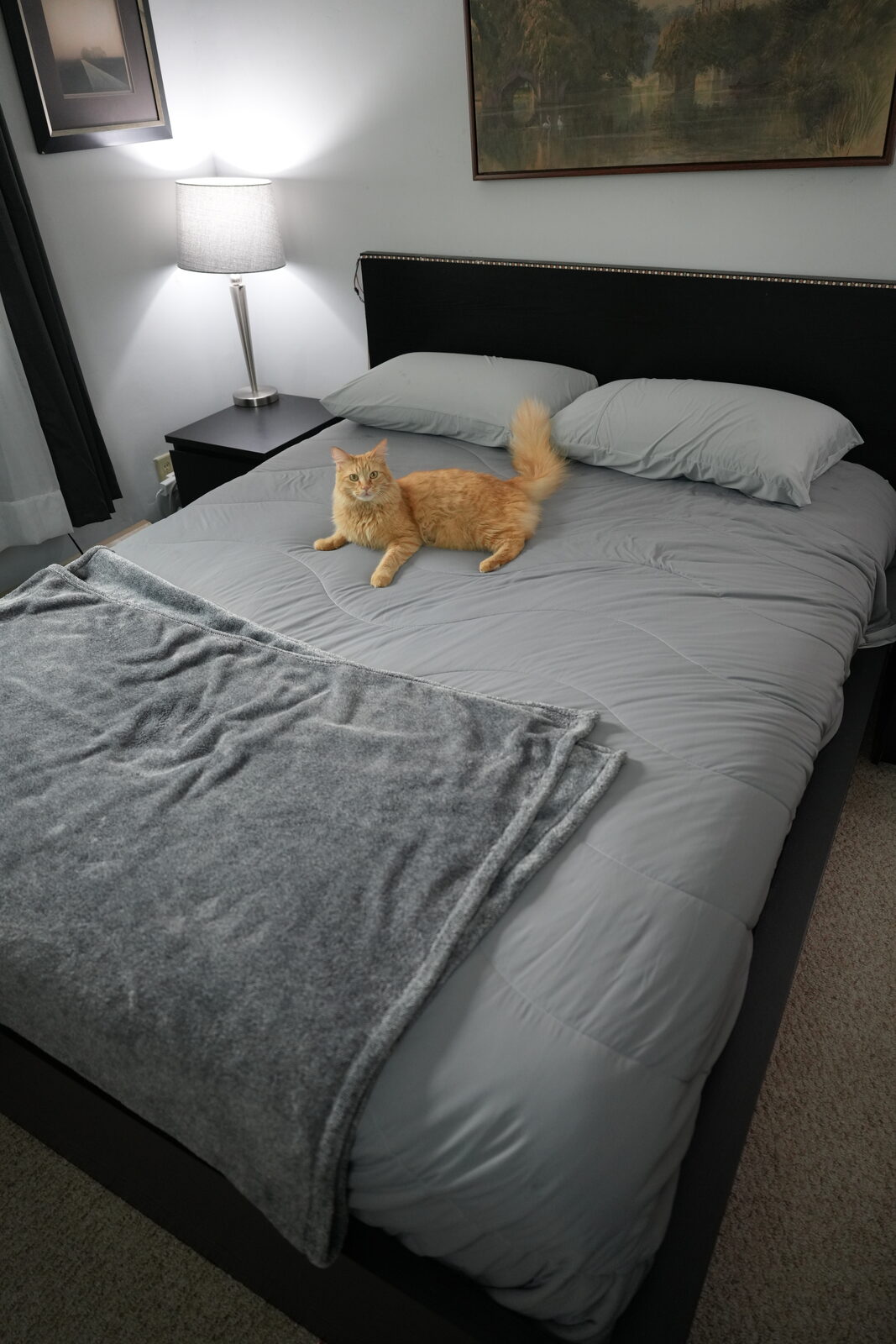
The best cat hair resistant comforter in my house is the REST Evercool. I bought it a year ago for $170 because my old cotton-poly comforter was a hair-encrusted disaster, and 12 months and 3 cats later it still looks new. That's the answer if you want to stop reading right now.
The longer answer is fabric, not brand. A comforter that repels cat hair is smooth, tightly woven, and low-static. A comforter that grabs hair is brushed, loose, and full of polyester. The REST nails the first list, my old comforter was a poster child for the second. This is part of the cat hair bedding guide, and the bedding guide goes deep on the science. This page is the shortcut, 3 picks, what to buy, what to skip.
The criteria
What to look for in a cat-resistant comforter
Three things matter, and they all overlap. You want smooth, you want tight, you want low static. The bedding guide has the long version with macro photos, the short version is below.
Smooth surface. Run a finger across the fabric. If it feels fuzzy, it will hold hair. If it feels slick and cool, it lets hair go. That fuzzy feeling is a layer of lifted micro-fibers up close, and every one of them is a hook for a cat hair. A slick surface gives hair nothing to anchor to.
Tight weave. A loose weave means the fabric has gaps where hair works its way in. Once it's in, no roller pulls it back out cleanly. Tight weaves keep the hair on the surface, where you can wipe it off in one pass. Nylon and polyamide weaves are the tightest, bamboo sateen and percale cotton are next.
Low static. Static actively pulls hair toward the fabric. Polyester is the worst offender, especially in dry winter air. Natural fibers and nylon both run lower static than poly blends, so hair lands when it lands instead of being yanked out of the air onto the bed.
The fabrics that hit all 3 are nylon and polyamide (the REST family), bamboo with a sateen finish, eucalyptus and Tencel, and high-thread-count percale cotton. Anti-snag and anti-pilling are bonuses for a house with claws, but not technically required.
The skip list
What to avoid
Brushed microfiber is the worst common comforter fabric for cat hair, full stop. The brushed finish that feels cozy in the store is the same finish that gives every cat hair multiple anchor points. The polyester underneath builds static. Hair survives a hot wash and a tumble dry. Pull a brushed microfiber comforter out of the dryer and it can come out hairier than it went in.
60/40 cotton-poly is the default cheap comforter and the second-worst category. Loose weave, polyester static, and most of them are finished with a slight brush to feel softer. I owned one of these for 4 years before the switch. It went in the donation pile because no amount of washing got the hair out, and the surface pilled wherever a cat had caught it with a claw.
Anything labeled brushed, ultra-soft, plush, fleece, flannel, velvet, or chenille is in the skip pile too. Doesn't matter what fiber it's made of. The texture is the problem.
Pick 1 • Best overall
REST Evercool Comforter
This is the comforter I own and use every night. Both sides are the same nylon-blend Evercool fabric, slick, tightly woven, low static. Hair has nothing to grab onto, so a swipe of the hand from headboard to foot of the bed clears most of it. For the few that hold on, a ChomChom pass takes 30 seconds.
The cooling number REST quotes is a Qmax 0.36 cool-touch rating vs roughly 0.11 for cotton. That's more than 3 times cotton, and you feel it the second you slide under it. It runs thinner than a traditional puffy duvet, closer to a substantial blanket, which is part of how the cooling works. In a 68F bedroom it's fine year round. In a colder bedroom you throw a quilt on top from December through February and that's the whole fix.
The anti-snag and anti-pilling claim is the part I didn't expect to matter. 3 cats including 2 outdoor rescues, kneading the bed every morning, claws catching when they sprint. A year in, no pulled threads, no pills, no snags. The fabric is slick enough that claws skate off instead of digging in. My old cotton-poly was visibly pilled after 6 months.
Two real complaints. It slides on slick sheets, especially the matching REST Evercool sheets, so it slips off the foot of the bed if you move around a lot. A duvet cover with grip solves it, cotton sheets underneath solve it, tugging it back once a night solves it. And $170 queen is a premium comforter price, no pretending otherwise.
Pros
- Hair brushes off in 30 seconds, doesn't embed
- Both sides are the same fabric, no wrong-side-up problem
- Anti-snag against claws, no pulled threads after a year
- Anti-pilling, surface still looks new at 12 months
- Measurably cooler than cotton, Qmax 0.36 vs 0.11
- Antimicrobial silver yarn, no funk between washes
- Hair leaves the fabric in the rinse instead of cycling back
Cons
- Thinner than a traditional comforter, runs cold without a second layer in winter
- Slick fabric slides on slick sheets
- $170 queen is a premium price
- Doesn't pair with a fuzzy duvet cover, the cover becomes the hair magnet
Pick 2 • Best budget alternative
Bamboo Sateen Comforter (Bedsure or LinenSpa)
I want to be straight about this pick. I haven't lived with a bamboo sateen comforter on this bed. I used a bamboo sateen sheet set in another room before the REST sheets, and the fabric behaves the way you want for cat hair, smooth, low static, hair brushes off. So I'm comfortable saying the category works. I just can't tell you Bedsure brand X or LinenSpa brand Y is better than the other one because I haven't run them through a year of 3 cats the way I have with the REST.
What to actually buy when you're shopping bamboo. Look for sateen finish in the fabric description. That's the smooth, slightly shiny weave that lets hair release. Skip anything labeled brushed, ultra-soft, plush, or microplush. That's bamboo trying to feel like microfiber, and it now grabs hair like microfiber. The whole point of bamboo for cat hair is the smooth surface, brushing it defeats the point.
Bedsure and LinenSpa both sell bamboo or bamboo-blend comforters in the $40 to $60 range. California Design Den and Cariloha are pricier and a step up in feel. Cosy House Collection is in the same neighborhood. Any of those should put you in the right fabric category if you read the product description and avoid the brushed variants.
The compromise vs the REST is straightforward. Bamboo sateen is smooth and low static, so hair brushes off, but it's not as slick as nylon. Hair brushes off easily, not effortlessly. The cooling is real but not Qmax 0.36 territory. And bamboo is more prone to snagging if a cat catches it with a claw, where the REST genuinely shrugs claws off. For most cat owners that's a fine tradeoff at a third of the price. For 3 cats and 2 longhairs sleeping on the bed every night, I wanted the upgrade.
Pros
- $40 to $60, a third of the REST price
- Sateen finish gives a smooth, low-static surface
- Naturally cooler than cotton-poly
- Widely available from Bedsure, LinenSpa, Cariloha, and others
Cons
- Not as slick as nylon, hair brushes off but not effortlessly
- More prone to snagging on claws than REST
- Brushed bamboo variants are still a hair magnet, read the label
- I haven't owned this specific category as a comforter, only as sheets in another room
Why fabric matters
Cotton vs slick weave, up close
This is the picture I want every cat owner to see before they buy a comforter. Same shedding house, same cats, same lighting. Old cotton-poly fabric on the left, REST Evercool nylon on the right.
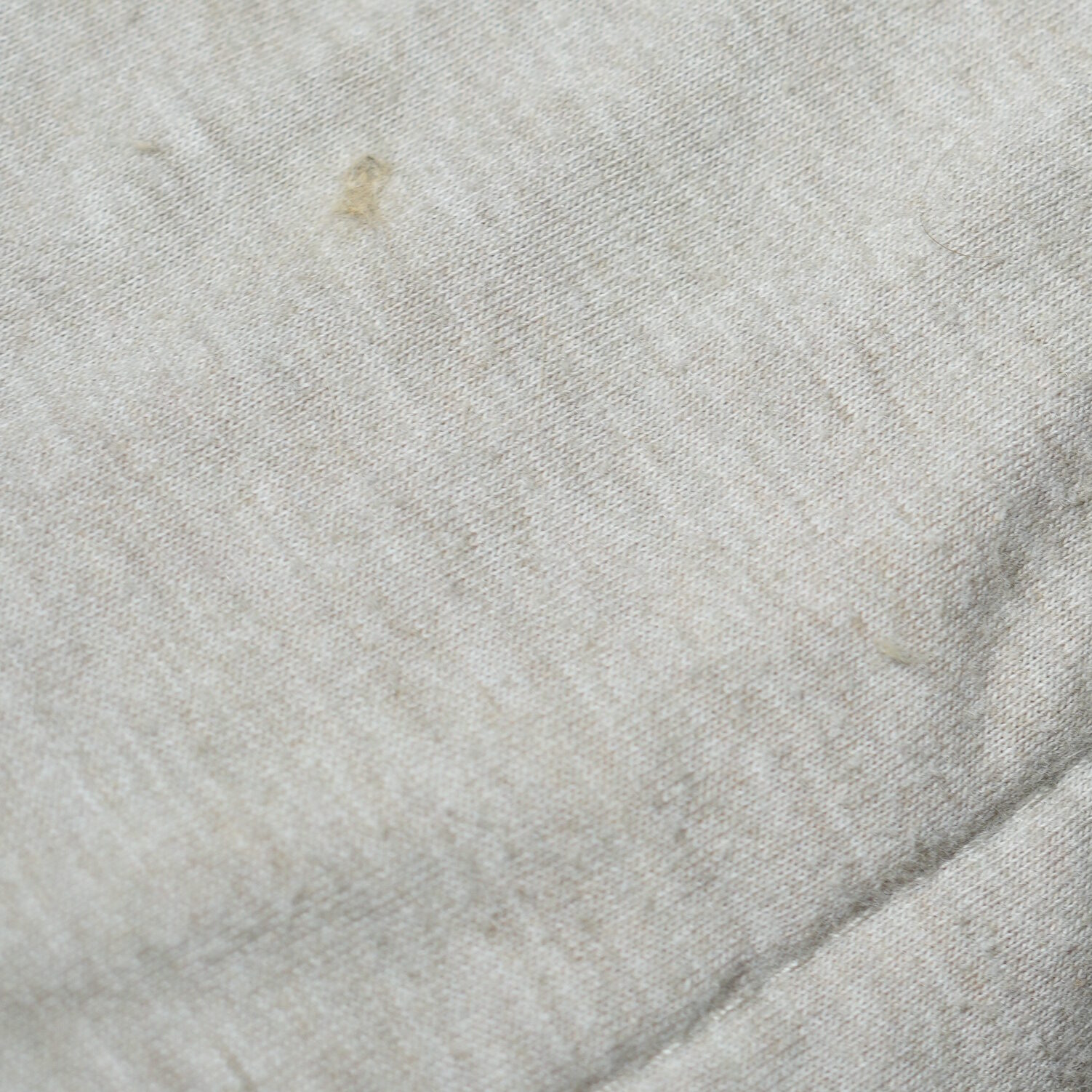
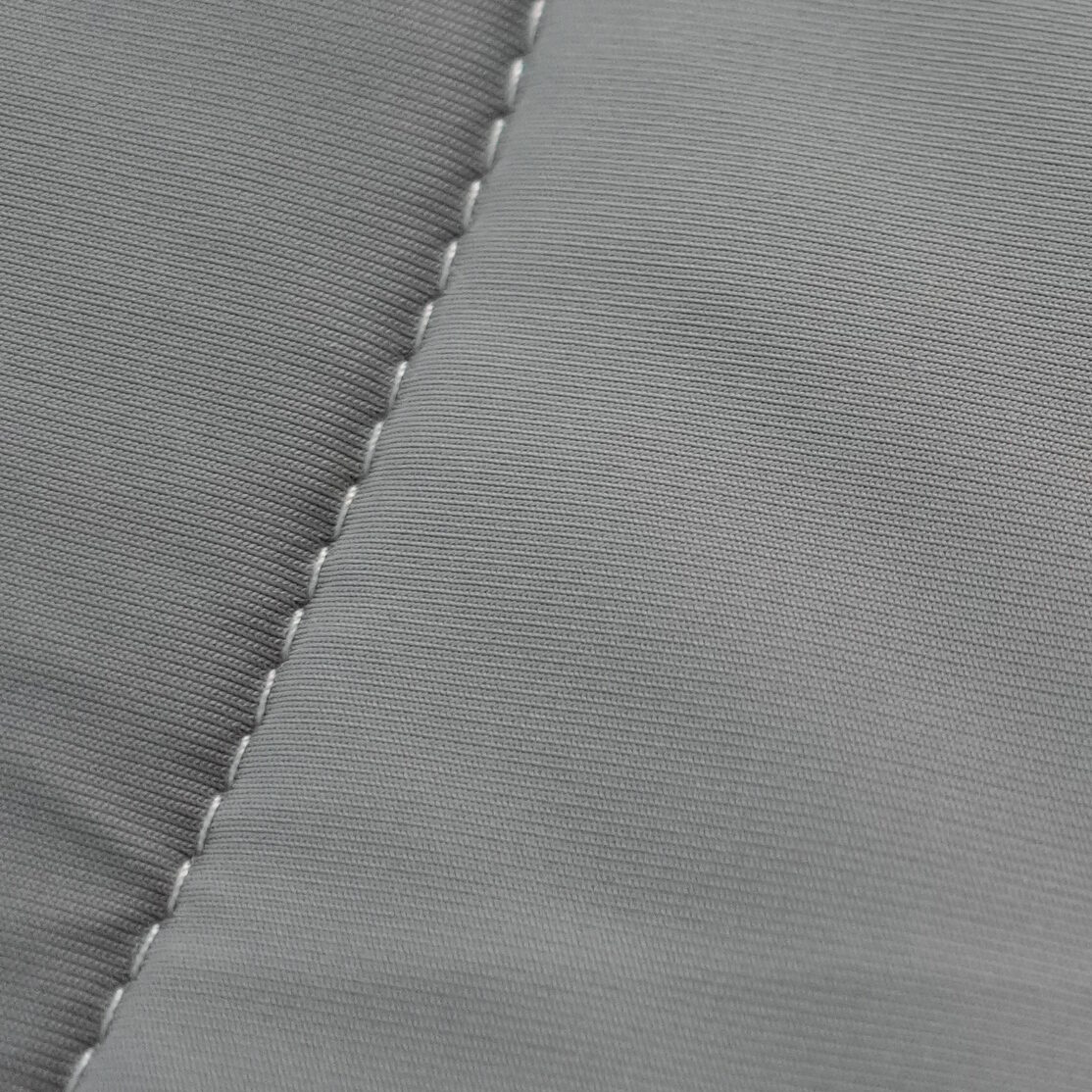
You don't need a macro lens to feel it. Run a finger across each. The cotton drags, the REST glides. Cat hair behaves accordingly. The same comparison applies to bamboo sateen vs brushed microfiber, the smooth one releases hair, the fuzzy one keeps it.
Want the next how-to update when I find something?
I'm working through pillowcases, mattress protectors, slick blanket throws, and the laundry side of bedding. Drop your email if you want updates when something earns a spot on the bed.
One-tap unsubscribe in every email. See the privacy policy.
Pick 3 • What to avoid
What I tried before that didn't work
I owned a 60/40 cotton-poly comforter for 4 years. Fluffy, soft, $30 on a sale, the default cheap comforter you grab when you're setting up a bedroom. By year 2 I was washing it twice a week and it still came out of the dryer hairy. By year 4 the surface was pilled where Luna sprinted across it and Herbie kneaded it. The thing was unsalvageable.
Before the cotton-poly there was a brushed microfiber comforter for about a year. Cozier in winter, even worse for cat hair. Brushed microfiber is the worst common comforter fabric, period. The lifted fiber surface gives every hair multiple anchor points and the polyester static drags hair onto the bed out of the air.
The pattern with both was the same. Roller, lint roller, dryer balls, FurZapper disc in the load, more washes, hotter washes. Hair came out baked into the fabric every time. The laundry routine wasn't the problem. The fabric was.
If you've got a brushed microfiber or cotton-poly comforter on the bed right now and you're losing the cat hair fight, the comforter is the fight. The roller is fine, the lint roller is fine, you don't need more tools. You need a smoother surface.
Side by side
Comparison at a glance
| Pick | Fabric | Price queen | Hair brushes off | Cool to sleep on | Claw-resistant | Owned by Felix |
|---|---|---|---|---|---|---|
| REST Evercool Comforter | Nylon-blend Evercool | $170 | Yes, in 30 seconds | Qmax 0.36 (cotton ~0.11) | Yes, anti-snag | Yes, 1 year |
| Bamboo sateen comforter | Bamboo viscose, sateen finish | $40 to $60 | Yes, less effortlessly | Cooler than cotton | Less so, can snag | No, fabric category only |
| Brushed microfiber / cotton-poly | Polyester, brushed finish | $25 to $40 | No, hair embeds | Warm, runs hot | No, pills with claws | Owned, threw out |
Frequently asked
FAQ
What's the best comforter to keep cat hair off?
A smooth, tightly woven, low-static fabric. The REST Evercool nylon-blend comforter is the one I own and the best I've tested. Hair lands and brushes off in 30 seconds. If $170 is too much, a bamboo sateen comforter for around $50 is the right budget swap. The fabric is what matters, not the brand.
Does bamboo work as well as nylon for cat hair?
Close, not identical. Bamboo sateen is smooth, low-static, and lets hair brush off. Nylon is slicker and lower static still, so hair releases faster and doesn't survive a wash cycle. For most cat owners bamboo sateen is the right balance of price and performance. For 3 cats and 2 longhairs, the nylon performance is worth the premium.
Why does brushed microfiber attract so much cat hair?
The brushed surface is a forest of lifted micro-fibers, every one of which gives a cat hair a place to hook into. Polyester also builds static, which actively pulls hair toward the fabric. The same finish that makes microfiber feel cozy is the reason it holds hair through a hot wash and a tumble dry.
Is REST Evercool worth the premium price?
If cat hair on the bed is a daily problem, yes. $170 once vs $30 cotton-poly twice plus 30 minutes a week of ChomChom forever. A year on the REST and it still looks new, the old comforter was a hair-and-pill matt inside 12 months. If hair on the bed isn't a real problem in your house, a $50 bamboo sateen comforter is the right call.
What's the cheapest comforter that doesn't grab cat hair?
A bamboo sateen comforter from a brand like Bedsure or LinenSpa, $40 to $60 queen. The rule is sateen finish, not brushed. Avoid anything labeled brushed, ultra-soft, or plush, that's bamboo trying to feel like microfiber and it now grabs hair like microfiber. A percale cotton comforter at 300+ thread count is the next-cheapest option that works.
Can you wash a cat-resistant comforter in a regular machine?
Yes. The REST Evercool washes cold on a gentle cycle and tumble dries low. Mine has been through 26 wash cycles in a year and looks new. Bamboo sateen comforters wash the same way. The benefit of a slick fabric is hair leaves in the rinse instead of cycling back into the fabric the way it did on cotton-poly.
Do duvet covers work for cat hair if the comforter underneath is cotton?
Yes, if the duvet cover itself is the right fabric. The cover is the surface that meets the cats, so the cover has to be smooth, sateen, or nylon. A brushed microfiber duvet cover wrapping a cotton comforter is just a hair magnet over a hair magnet. A sateen or nylon cover lets hair brush off and protects the comforter underneath.
How thick should a cat-resistant comforter be?
Thinner than you'd expect. The REST Evercool is closer to a substantial blanket than a traditional puffy duvet, and that's how the cooling fabric does its job. A thinner comforter also means less surface for hair to land on and less material to wash. In a cold bedroom you add a quilt on top in winter rather than buying a thicker hair magnet.
Will a cat-resistant comforter still be cool enough in summer?
The slick fabrics that repel hair tend to be the same ones that sleep cool. The REST Evercool quotes a Qmax cool-touch rating of 0.36 vs roughly 0.11 for cotton, more than 3 times cotton. Bamboo sateen is also naturally cool. So the answer is yes, cooler than a cotton-poly comforter, by a lot.
The comforter is the biggest piece of the bed and the one most likely to be wrong. Once it's right, the few hairs that do land are easy. A ChomChom pass on the bed itself takes 30 seconds. The laundry side of the equation is covered in how to remove cat hair from bedding, dryer-tumble first, FurZapper disc, then the wash. And the bedding hub covers sheets, pillowcases, and the rest of the bed if you want to redo the whole thing.
How I tested
The bar these picks had to clear
A year on the REST Evercool
One full year of nightly use, 3 cats including Luna and Herbie who are longhair, washed every other week. Not a 30-day demo, an actual year of laundry cycles and shedding seasons.
4 years on the cotton-poly before the switch
The "what to avoid" pick is the comforter I actually owned and threw out. 60/40 cotton-poly, 4 years of 3 cats, ended up pilled and unsalvageable.
Bamboo sateen, researched as a comforter
I've used bamboo sateen as sheets in another room, so the fabric category is familiar, but I haven't run a specific bamboo sateen comforter through a year on this bed. The pick is the right category, not a brand endorsement.