How to Get Cat Hair Off Black Clothes
Roll against the grain first, then with it. Two passes, fresh sheets each. Here's why.

Black pants in the morning. That's the moment, every time. You pull them on, you turn around in the mirror, and there's a layer of orange Herbie hair you didn't see when you took them off the hanger. Black shows everything, that's the whole problem.
This is part of the surface-by-surface remove cat hair guide, broken out because black clothes are different enough to be their own thing. With my 3 cats, two of them outdoor rescues and one of them a longhair orange shedder, I have spent a year figuring out the fastest way through this. The answer is a $4 lint roller and the order you roll it in.
Why black clothes are different
Black clothes don't pick up more hair, they show it
Cat hair sticks to black pants the same amount it sticks to khakis. The difference is contrast. Orange Herbie hair on a navy shirt is invisible until I get to work. On black it lights up like a runway. White hair, grey hair, doesn't matter, every shade of cat hair shows on black.
The other thing that conspires against you is static. Black dress fabric, especially polyester blends and denser weaves, holds a static charge after the dryer. The charge pulls hair the second a cat brushes against you. So black clothes get visible faster, and they get hairy faster too. Two problems, one fix.
The fix is mechanical, not chemical. No spray, no dryer sheet on the surface, no rubbing with a damp paper towel. A peel-off lint roller in the right direction does it in 30 seconds.
Step 1
Roll against the grain to lift the hair
This is the trick most people miss. Lay the garment flat or hold it taut. Roll the lint roller in the opposite direction the fabric was woven or knit. On a pant leg, that's bottom to top. On a t-shirt sleeve, it's cuff toward shoulder. Against the grain.
What happens is the hair stands up out of the weave instead of laying flat against it. A straight pass with the grain glides over the surface and only catches the hair sitting on top. The against-the-grain pass digs into the fibers and pulls hair the first pass would have skipped right over. I tested this on identical black work pants for a month, against-the-grain first picked up visibly more hair every time.
One pass, then peel the sheet. Sheets lose their tack the second you peel them, and they lose more tack with every stroke after that. Don't try to stretch one sheet across a whole pant leg, you'll smear hair instead of grabbing it.
Step 2
Roll with the grain to smooth the fabric
Fresh sheet, opposite direction. Roll with the grain this time, the way the fabric naturally lays. Top to bottom on the pant leg, shoulder to cuff on the sleeve. This pass catches the hairs the first pass lifted but didn't grab, and it lays the fibers back down so the garment doesn't look ruffled.
Two passes minimum, opposite directions, fresh sheet each. That's the whole method. On a pair of black dress pants it's about 60 seconds. On a t-shirt it's 30. If there's still visible hair after the second pass, you needed a fresher sheet, not a third pass.
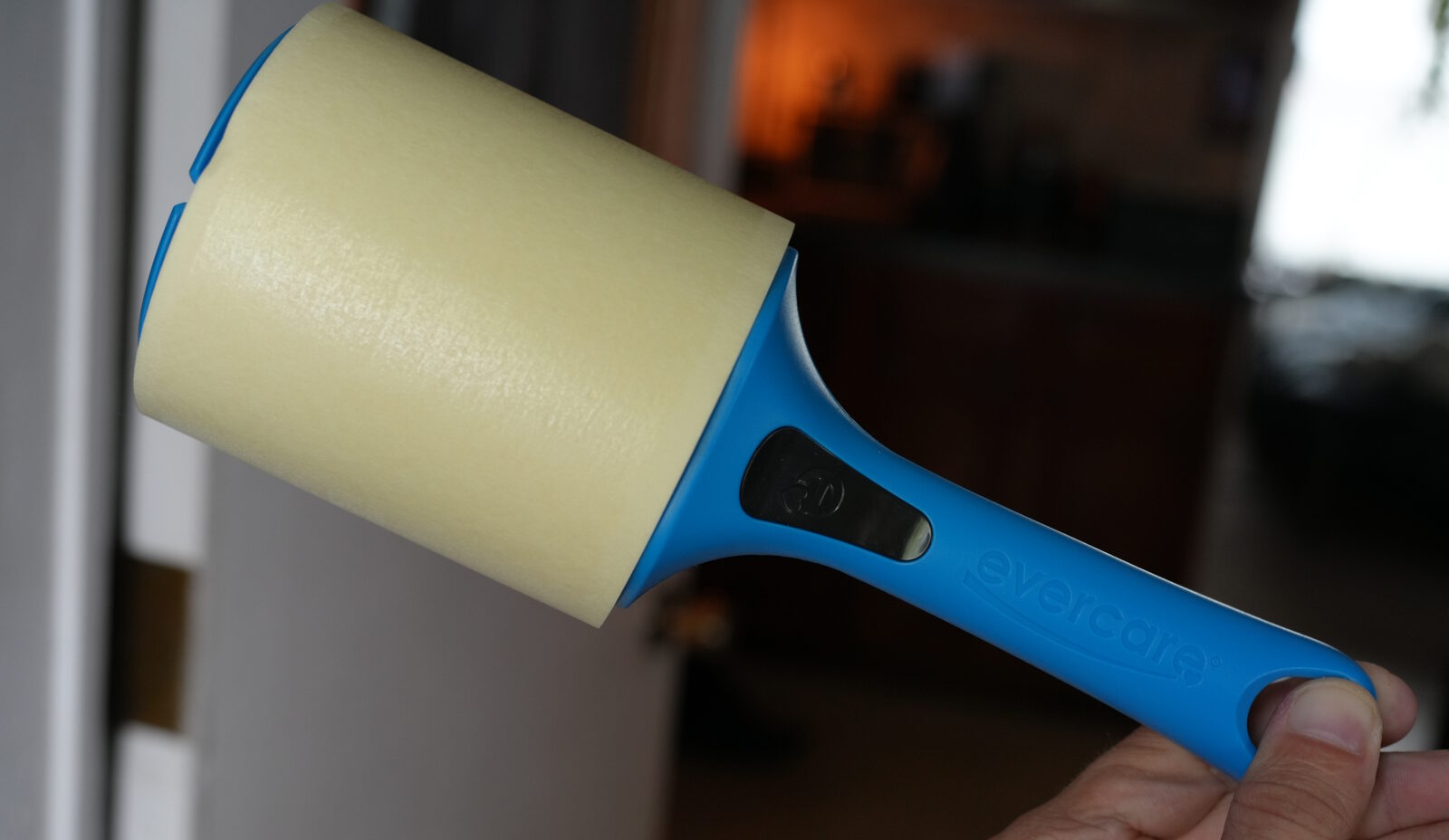
The Evercare extra-sticky 60-sheet roller is what I keep on the dresser. The store brand rollers I've tried lose tack after two strokes, the Evercare sheets stay grabby for a full pant leg. I have one by the door, one in the laundry room, one in the car. They're $4. Don't economize on sheets.
Step 3
For wool, cashmere, and dark suits, brush first
Tape adhesive is too aggressive for wool nap. On a black wool coat or a cashmere sweater the lint roller can lift fibers loose and leave a shiny patch where the nap used to be. Skip the roller as your first move on these.
Use a soft-bristled clothing brush instead. Run it against the grain. The hair walks off the surface in a clump you can pick up with your fingers or hit with the lint roller once. Brush first, roll second, and only if you need to. Cat hair sticks to wool worse than almost anything in my house, the brush is what gets it without damaging the fabric.
For black suits going to a wedding or a meeting, the brush plus a single light pass with a fresh sheet is the safe play. Don't tape down a $400 wool jacket, you'll regret it.
Want the next how-to update when I find something?
I'll only email when there's a real recommendation worth sharing. No weekly newsletter, no spam.
One-tap unsubscribe in every email. See the privacy policy.
Prevention
The painful truth: less hair on the cat means less hair on the pants
The lint roller is the cleanup. The actual fix is upstream. Brushing the cat reduces the source. Twice a week with an EquiGroomer on Herbie pulls a literal handful of orange fur off him each session, and that's a handful that doesn't end up on my black pants. He sheds onto everything, but he sheds less when I keep up with the brushing.
In the laundry, a FurZapper silicone disc in the wash and the dryer pulls hair into the lint trap instead of redistributing it onto the next item. One disc per pet, so 3 in my house. The black t-shirt comes out of the dryer with noticeably less hair baked in. Modest help, not magic, but on black it's visible.
The dumbest fix that works: don't store black clothes in the same drawer as the cat-friendly fabrics. The fleece blanket Luna sleeps on shouldn't be folded next to my black work pants. Drawer separation is free and it stops half the contamination before it starts.
What not to do
Things that don't work, in order of how bad they are
Cheap brand lint rollers. The drugstore generic ones save you a dollar and lose their tack after two strokes. You'll burn through 10 sheets to do what an Evercare does in 4. Buy the Evercare.
Packing tape on wool or cashmere. The adhesive is too strong for delicate weaves. It pulls fibers loose and on black you can see the patch in the right light. Tape is fine on cotton in a pinch, never on wool.
The dryer alone. 10 minutes on low gets you 80 percent of the way there. The hair you can still see when the cycle ends is the hair the dryer can't shake loose, and that hair only comes off with a roller. The dryer is step one of three, not the whole solution.
Damp rubber gloves on a worn shirt. Works great on a couch cushion. On a shirt you're wearing it just smears hair around and dampens the fabric. Wrong tool for clothes.
Reusable rubber rollers (the Sticky Buddy type). They work, but you have to rinse them after every use and the tack is weaker than a fresh peel-off sheet. For a quick black-pants fix on the way out the door, peel-off wins on speed every time. More on the Sticky Buddy here.
Frequently asked
FAQ
Why does cat hair stick to black clothes more than other colors?
It doesn't actually stick more, you just see every single hair. Black fabric also tends to be denser weaves like dress pants, suits, and t-shirts, and those weaves hold static. Static plus high contrast equals a shirt that looks furry after one minute of contact with a cat. Light hair on light clothes is just as bad, you don't notice it as fast.
What's the best lint roller for black clothes?
An Evercare extra-sticky 60-sheet peel-off. About $4. The store-brand rollers I've tried lose tack after two strokes, the Evercare sheets stay grabby for a full pass on a pant leg. Full Evercare review here. Same design that's been around forever, it just works the best.
Can you use tape instead of a lint roller on black clothes?
It works on cotton in a pinch. Wrap packing tape sticky-side out around your hand and pat the garment. Don't use it on wool, cashmere, or anything pilled. Tape adhesive is too aggressive and pulls fibers loose, and on black wool you can leave a shiny patch where the nap got yanked. Lint rollers use a softer adhesive on purpose.
How do you get cat hair off a black wool coat?
Brush first, roll second. Run a soft-bristled clothing brush against the grain, the hair walks off the surface and into a clump you can pick up. Then a light pass with a lint roller for the holdouts. Skip the tape, skip the rubber gloves. Wool nap is delicate and the brush is gentler than anything sticky.
Does the dryer remove cat hair from black clothes?
It helps but it doesn't finish the job. 10 minutes on low or no heat with a FurZapper or two pulls a lot of hair into the lint trap. The hair you can still see when the cycle ends is the hair the dryer couldn't shake loose, and the only thing that gets that off is a peel-off lint roller. Use the dryer to do 80 percent of the work, finish with the roller.
Why do black clothes pick up so much cat hair in the wash?
Hair from other items in the load redistributes onto whatever's in the washer. Black clothes show it the most. The fix is a FurZapper silicone disc, one per pet, in the wash and the dryer. The hair sticks to the disc instead of your clothes. It's not magic, it's modest, but on a black work shirt the difference is visible.
Can FurZapper help with cat hair on black clothes?
Yes, in the laundry. The disc gives loose hair a tacky surface to stick to during the wash and the dryer, so less of it ends up baked into the fibers of your black t-shirt. It won't replace a lint roller after you put the shirt on, the cat will sit on you the second you sit down. Prevention plus a $4 roller is the working setup. Full FurZapper review.
How do you remove cat hair from a black t-shirt fast?
Two passes with a peel-off lint roller, opposite directions, fresh sheet each time. 30 seconds. Roll up the front against the grain, peel the sheet, roll down with the grain. Same on the back. Don't try to stretch one sheet across the whole shirt, sheets lose tack the second you peel them. Keep a roller by the door.
What's the cheapest way to get cat hair off black pants?
A $4 Evercare lint roller. Cheaper than a brush, cheaper than a rubber roller, faster than tape. The store-brand rollers are a couple of bucks less and they're worse, the sheets lose tack in two strokes. The real cost saver is brushing the cat with an EquiGroomer twice a week so there's less hair to get on the pants in the first place.
If you're past black clothes and you want the parent topic, the how to remove cat hair from clothes page covers cotton, denim, fleece, and the laundry side of the same problem. The main remove cat hair guide has every other surface in the house.
How I tested
The bar this thing had to clear
Real work clothes, not staged
Black work pants and black dress shirts that I actually wear, in a house with 3 cats. Two of them are outdoor rescues, one is a longhair orange named Herbie who sheds onto everything black I own.
A year of testing
Tested across a full year of seasons, including the spring shed when Herbie loses what feels like a second cat. The against-the-grain trick held up the entire time.
Side-by-side passes
Tested the against-the-grain-then-with-the-grain method against straight passes on identical black pants, fresh sheets each. Two opposite passes pulled visibly more hair every single time.